If a deviated septum is blocking your nose and you are also unhappy with its shape - or the outside of the nose is crooked because the septum is bent - both problems can be treated together. One anaesthetic, one recovery, and a plan that considers how your nose works and how it looks.
What Is Septorhinoplasty?
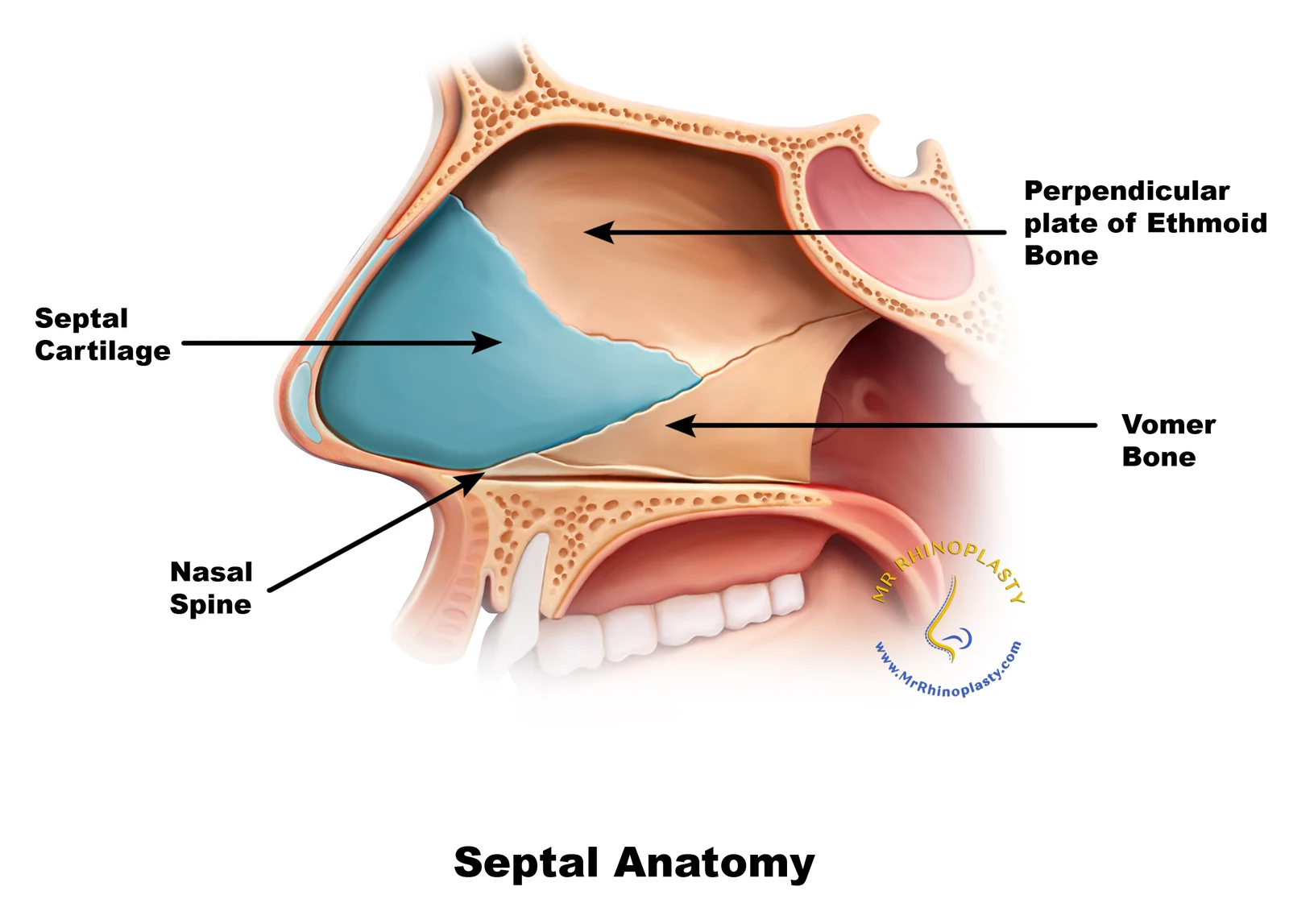
The septum is the central wall of cartilage and bone inside the nose. It divides the airway into two passages and supports the bridge and tip, so a bent septum often affects both breathing and appearance. Septorhinoplasty corrects the septum (septoplasty) and the external shape of the nose (rhinoplasty) in the same operation.
Who Is It For?
Septorhinoplasty is usually recommended when breathing and the shape of the nose need to be addressed together, for example:
Crooked nose
A nose that is twisted or off-centre, often because the septum is bent.
Blocked nose
Difficulty breathing through one or both sides caused by a deviated septum.
After an injury
A nose that has changed shape and become blocked following a fracture.
Shape and breathing
Patients who would like to change the shape of their nose and also have breathing problems.
See Crooked Nose, Deviated Septum and Post-Trauma Deformity.
Why Combine the Two?
The septum is the foundation of the nose. Straightening the outside of the nose without correcting a bent septum can allow the nose to drift back over time, and treating the septum alone will not change a crooked external shape. Correcting both together treats the inside and outside of the nose as one structure - with a single anaesthetic and a single recovery period.
How Is Septorhinoplasty Performed?
The operation is carried out under general anaesthetic. Depending on what needs to be corrected, Mr Patel may use a closed approach, working entirely inside the nose, or an open approach, with a small incision across the columella - the strip of skin between the nostrils.
Straightening the septum
Bent cartilage and bone are repositioned or partly removed to open the airway. Removed cartilage can be reused as graft material.
Reshaping the nose
The bridge, tip and nasal bones are adjusted to straighten the nose and bring it into balance with the face.
Supporting the airway
Where the nasal valves are weak, cartilage grafts can help keep the airway open. See Nasal Valve Collapse.
Recovery After Septorhinoplasty
Your nose will feel blocked for the first couple of weeks while the lining heals, and there will be some swelling and bruising around the nose and eyes. If the nasal bones have been adjusted, you will usually wear a splint for around a week. Most visible swelling settles over the first few weeks, but the final shape continues to refine over many months. See The Patient Journey for what to expect at each stage.
Mr Patel is a Consultant ENT Surgeon, so your breathing and the appearance of your nose are assessed together at every consultation.
Blocked and Crooked?
To find out whether septorhinoplasty is right for you, book a consultation with Mr Patel at 51 Harley Street.