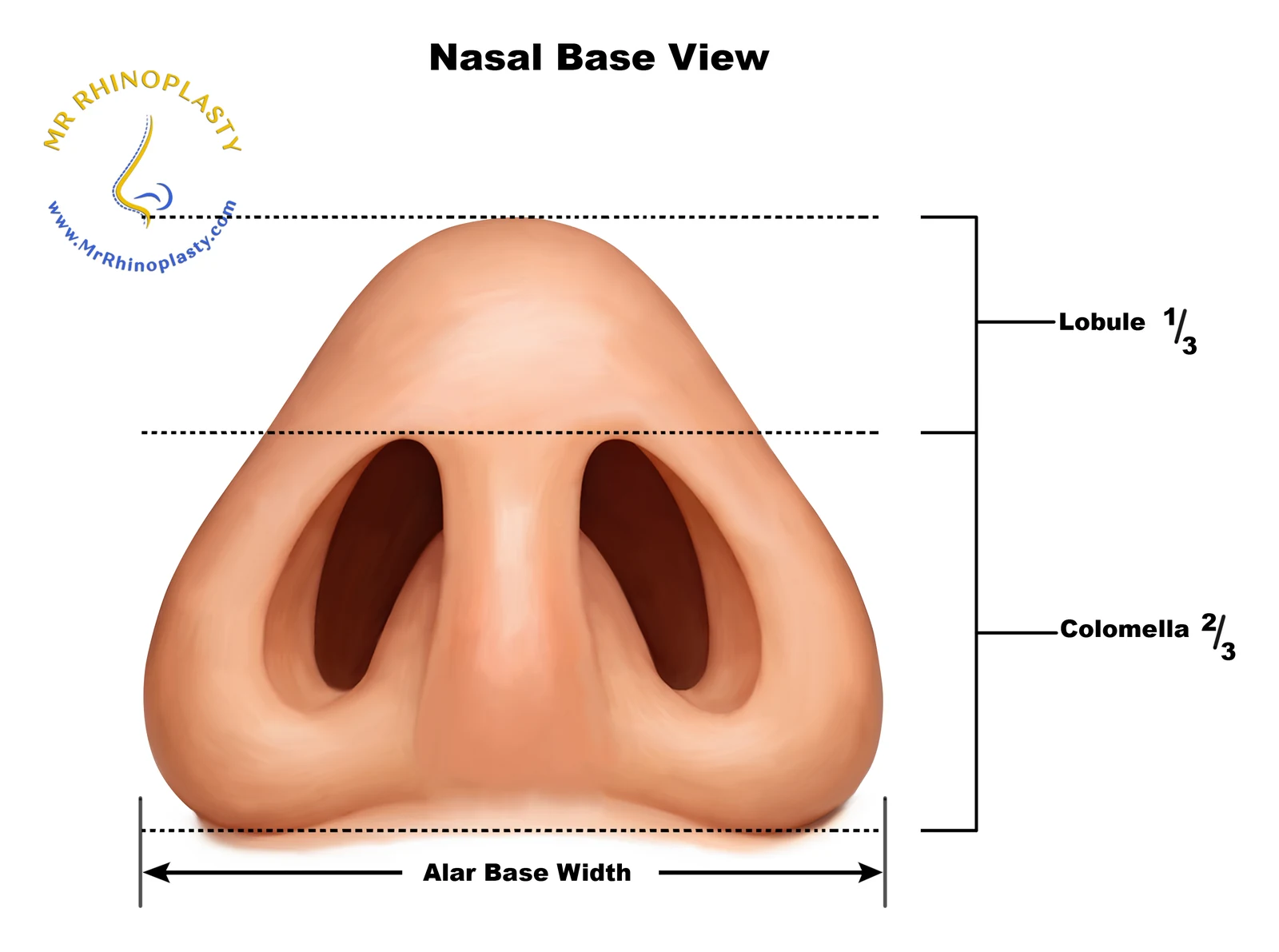
Wide nostrils refer to the width of the nasal openings at the base of the nose, sometimes described by patients, as most noticeable when the face is viewed from below or from the front. When the sides of the nose are wider than the vertical lines arising form the middle corners of the eyes, we describe this as excess alar base width. Often the nostrils widen when smiling.
The width of the base of the nose is set by the alae - the curved sides of the nostrils - and the point where they join the cheek. When the alae flare outwards or attach further apart, the base of the nose looks wide from the front and the nostril openings look large from below.
Some patients are entirely happy with the width of their nostrils and are seeking changes elsewhere in the nose; for others, narrowing the nostrils is an important part of achieving the overall balance they are looking for. Both are entirely valid starting points for a consultation.
Nostril width is largely determined by the shape and thickness of the alar cartilages and surrounding soft tissue, and varies naturally across different nasal shapes, facial proportions, and ethnic backgrounds. Wide nostrils are a normal anatomical variation, not a sign of any underlying problem.
Wide nostrils are most noticeable from the front and from below, and often more so when smiling. They are a cosmetic concern rather than a breathing problem, and the aim of any change is to bring the base of the nose into balance with the bridge, tip and the rest of the face.

Where wide nostrils are a concern, alar base reduction can narrow the width of the nostrils at their base, usually performed alongside other tip or bridge refinements.
Alar base reduction removes a small, precisely planned wedge of skin and tissue where the nostril meets the cheek, or from inside the nostril sill, to narrow the base of the nose and reduce flaring. It can be performed under local or general anaesthetic, alone or as part of a rhinoplasty. The incisions are placed in the natural crease at the base of the nostril so that they heal discreetly.
Most visible bruising and swelling settle over the first few weeks, while the final shape continues to refine over around 12 months as residual swelling subsides - the nasal tip is usually the last area to settle. See Post Operative Care and Healing Journey and Final Results for what to expect at each stage.
If you are considering changes to the width of your nostrils, book a consultation with Mr Patel to discuss your options.
Personal consultation
Discuss your wide nostrils with Mr Patel
A one-to-one assessment of your nose, skin and breathing, with honest advice on what is achievable.
Book a Consultation 0207 262 0297Every nose is different. Mr Patel will assess your anatomy in person and explain the options, recovery and realistic outcome.
Prefer to talk? Call 0207 262 0297