



Consultant Rhinoplasty Specialist · Harley Street, London

Home › Understanding Rhinoplasty

Harley Street Rhinoplasty Specialist

What Is Rhinoplasty?

Rhinoplasty – often called a ‘nose job’ – is a surgical procedure that reshapes the nose to change its appearance, improve how it functions, or both. Septoplasty is a related procedure that corrects a deviated or deformed nasal septum to improve breathing, without changing the external shape of the nose. At Mr Rhinoplasty, Mr Kalpesh Patel performs rhinoplasty, septoplasty, and septorhinoplasty – the combined procedure – for aesthetic refinement, breathing problems, and reconstruction after injury.

Consultations at 51 Harley Street, London · Surgery at the Lindo Wing, St Mary’s Hospital

FRCS (ORL-HNS)

Fellow of the Royal College of Surgeons

GMC Registered

GMC No. 2953492

Consultant ENT Surgeon

Imperial College Healthcare NHS Trust since 1995

3,000+

Nasal Procedures Performed

Founding President

British Society of Rhinoplasty Surgeons

Appearance & Breathing

What's the Difference Between Cosmetic and Functional Rhinoplasty?

Cosmetic rhinoplasty icon

Cosmetic rhinoplasty

Cosmetic rhinoplasty changes the shape, size or proportions of the nose – for example, smoothing a dorsal hump, refining the tip, or narrowing the bridge.

Safety icon

Functional rhinoplasty

Functional rhinoplasty addresses how the nose works, most commonly by correcting a deviated septum or collapsed nasal valve to improve breathing.

Many patients have both concerns, and when rhinoplasty is combined with septal surgery in this way it is known as septorhinoplasty – a single procedure, single recovery, addressing appearance and airway together.
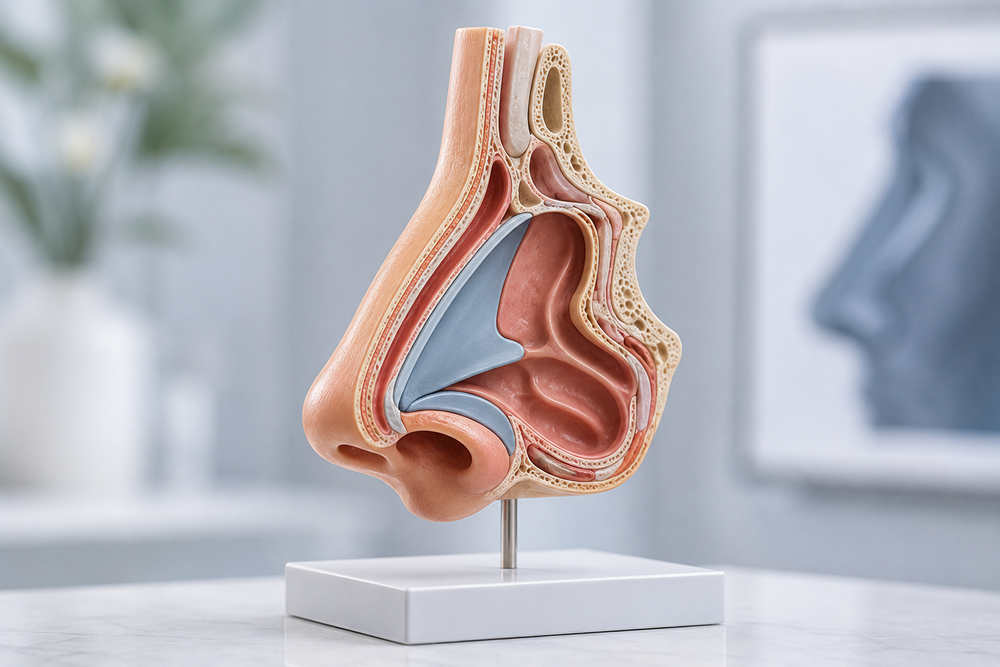
Anatomical model of the nose showing the septum
The Nasal Septum

What Is Septoplasty?

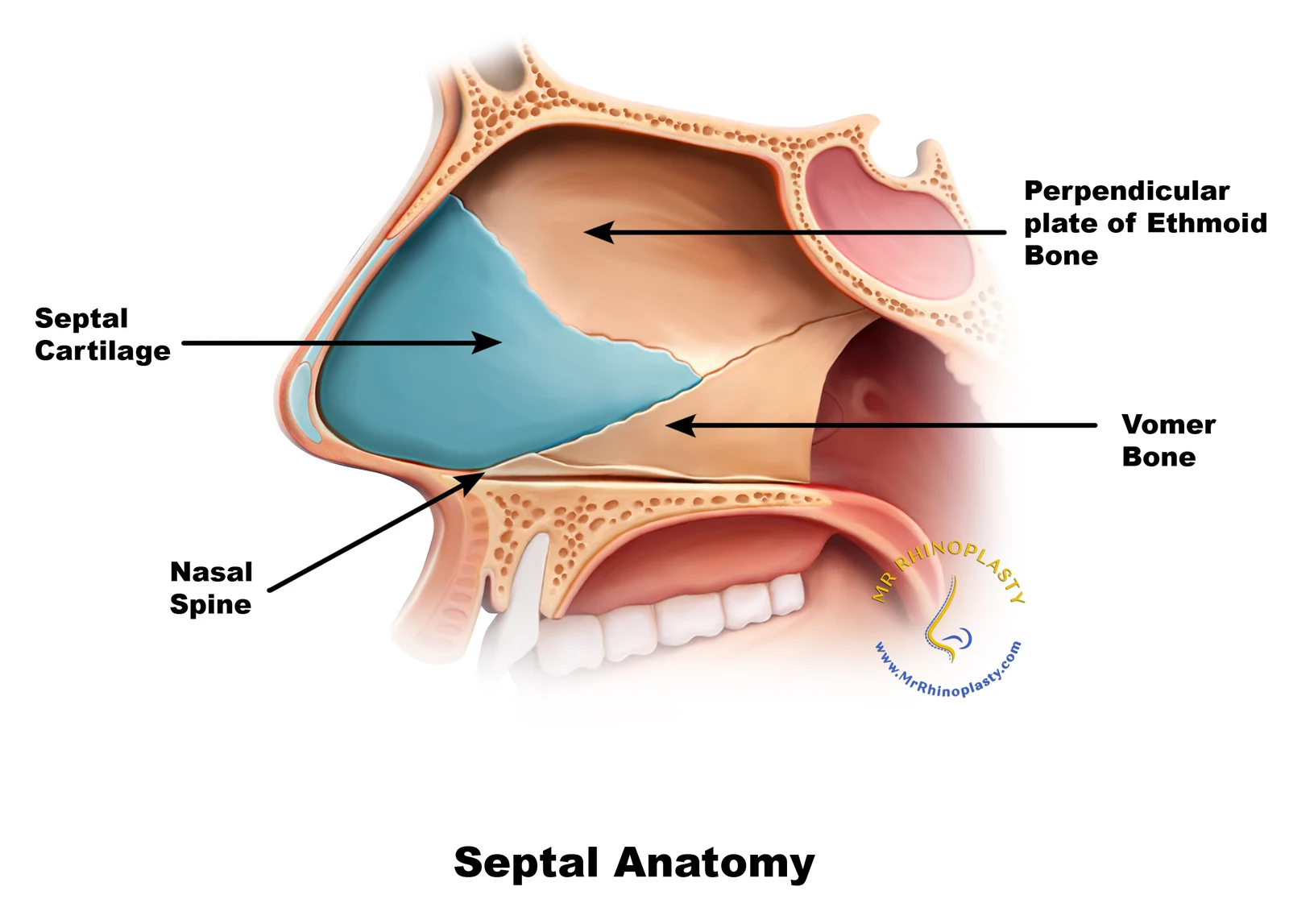
Septoplasty is a procedure to straighten the nasal septum – the wall of cartilage and bone dividing the two nostrils – when it is deviated and obstructing the airway.
Unlike rhinoplasty, septoplasty does not change the external appearance of the nose; its purpose is purely functional, improving the flow of air through the nasal passages.
For straightforward septal deviations, septoplasty is usually performed through a closed approach, with incisions made entirely inside the nose and no external scar.
For complex septal deformities – particularly those affecting the caudal septum (the lower, front edge of the septum near the tip) or involving significant displacement of cartilage and bone – an external approach (sometimes called open or extracorporeal septoplasty) may be used.
This gives Mr Patel complete visualisation of the septal framework, allowing thorough correction and, where needed, reconstruction using the patient’s own cartilage.
Rhinoplasty: Open vs Closed

What's the Difference Between Open and Closed Rhinoplasty?

Nose profile icon

Open rhinoplasty

Open rhinoplasty uses a small, well-concealed incision across the columella (the strip of skin between the nostrils), giving the surgeon a complete view of the underlying structures – the same principle that applies to the external approach used for complex septoplasty.

Nostrils icon

Closed rhinoplasty

Closed rhinoplasty places all incisions inside the nostrils, leaving no external scar.

Both approaches heal to leave minimal visible marking; the right choice depends on the specific changes needed and is something Mr Patel discusses individually with each patient. Read more in our FAQs.
Primary vs Revision

What's the Difference Between Primary and Revision Rhinoplasty?

Primary rhinoplasty is a first operation on a nose that hasn’t been surgically altered before. Revision rhinoplasty refines or corrects the result of a previous rhinoplasty, and is generally more complex, often requiring additional cartilage grafts. Following rhinoplasty, the typical revision rates sit at around 5-7% – a figure Mr Patel discusses openly with patients as part of setting realistic expectations.
Primary and revision rhinoplasty – nose profile illustration
How every decision is made

The BRAIN Framework

“I use the BRAIN framework to make sure every patient leaves with a clear, honest picture of their options, including the option of doing nothing at all.”
- Mr Kalpesh Patel FRCS (ORL-HNS)
B

Benefits

What surgery can realistically achieve for you.

R

Risks

An open discussion of the risks involved.

A

Alternatives

Whether a different approach - surgical or non-surgical - might suit you better.

I

Intuition

Space for your own instinct about what feels right.

N

Nothing

Honesty about what would happen with no surgery at all.

Liquid Rhinoplasty Explained

Liquid Rhinoplasty

A liquid rhinoplasty implies use of filler material which is usually hyaluronic acid. This is used to change the shape of the nose and can be quite effective when there is an absence of structure such as a dip along the bridge of the nose. The filler is injected to elevate the skin and create a smooth profile. Fillers cannot therefore make the nose smaller and the result is not permanent. It can last for 12-18 months. Filler material must always be dissolved before seeing a Surgeon for surgical rhinoplasty.
Please note
Liquid rhinoplasty is not performed by Mr Patel but patients can be referred to experts in this area.
To find out which type of rhinoplasty or septoplasty is right for you, book a consultation with Mr Patel at 51 Harley Street.

Anatomy

Anatomy of the Nose

The nose is a complex three-dimensional structure made up of bone, cartilage, soft tissue and skin, working together to support both breathing and facial appearance. A basic understanding of nasal anatomy helps explain why rhinoplasty is considered one of the most technically demanding areas of facial surgery - changes to one part of the nose almost always affect both its shape and its function.

  1. Upper thirdThe bridge (dorsum)Supported by the nasal bones
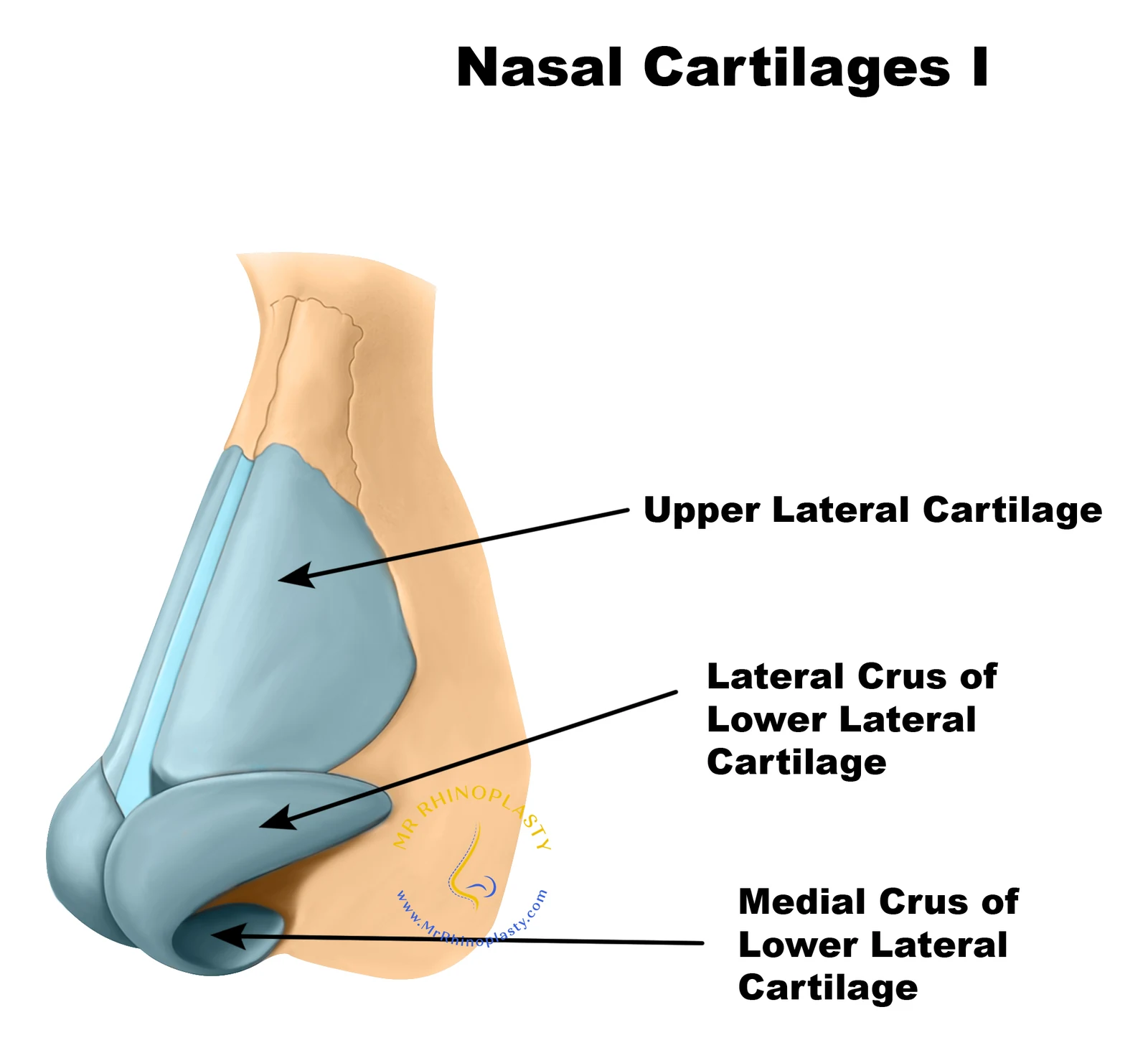
  2. Middle thirdThe mid-vaultFormed by the upper lateral cartilages
  3. Lower thirdThe tipShaped by the lower lateral (alar) cartilages
01

What Are the External Parts of the Nose?

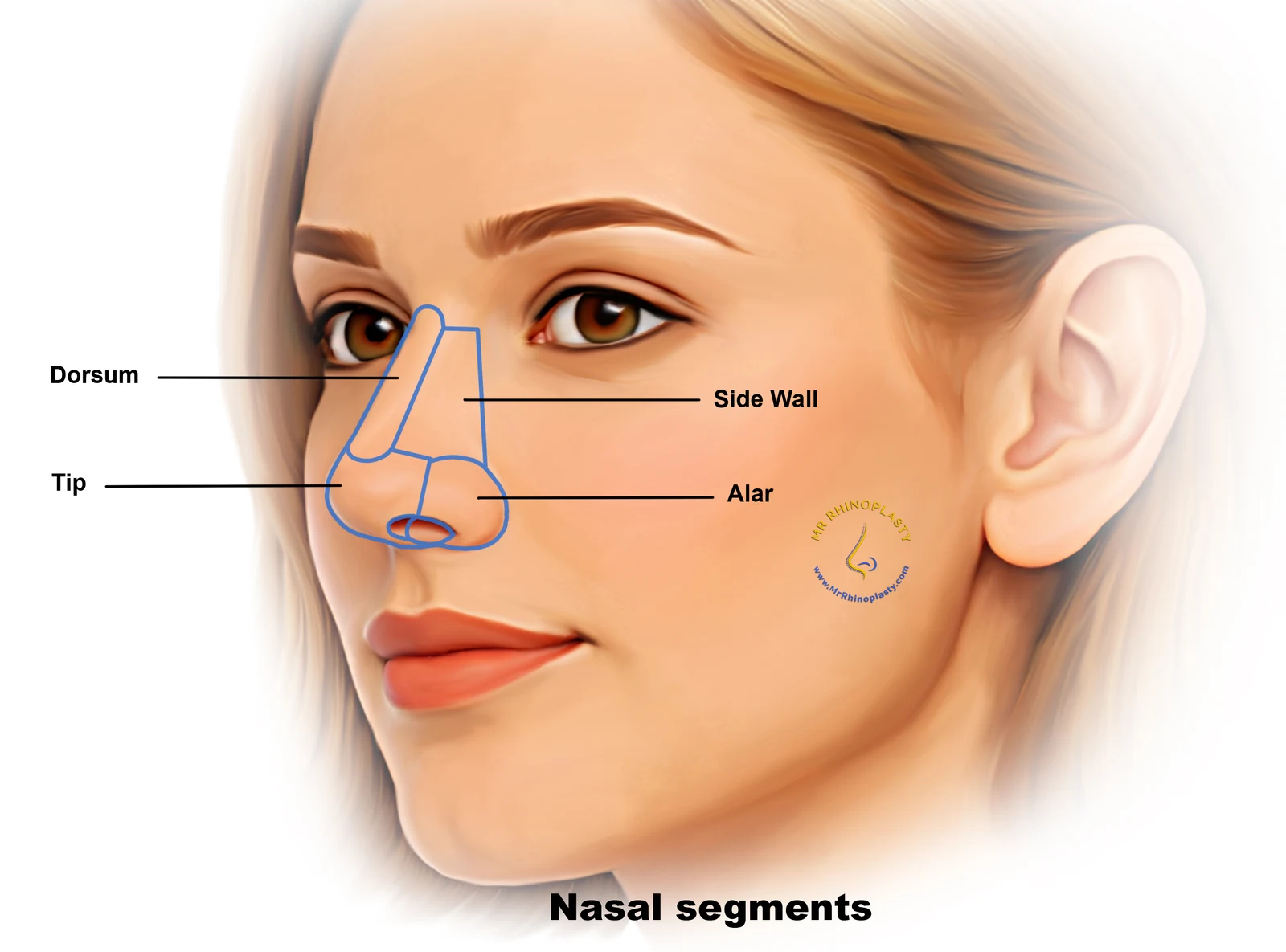
The visible parts of the nose are formed by bone and cartilage, covered by skin of varying thickness. The lower lateral cartilages determine the tip's projection, rotation and definition.

Columella
The strip of skin and cartilage separating the two nostrils.
Ala
The outer walls of the nostrils.

Each of these structures can be individually assessed and, where appropriate, refined during rhinoplasty.
02

What's Inside the Nose? Internal Structure and the Airway

Septum
A wall of cartilage and bone dividing the two passages and providing central support for the whole nose.
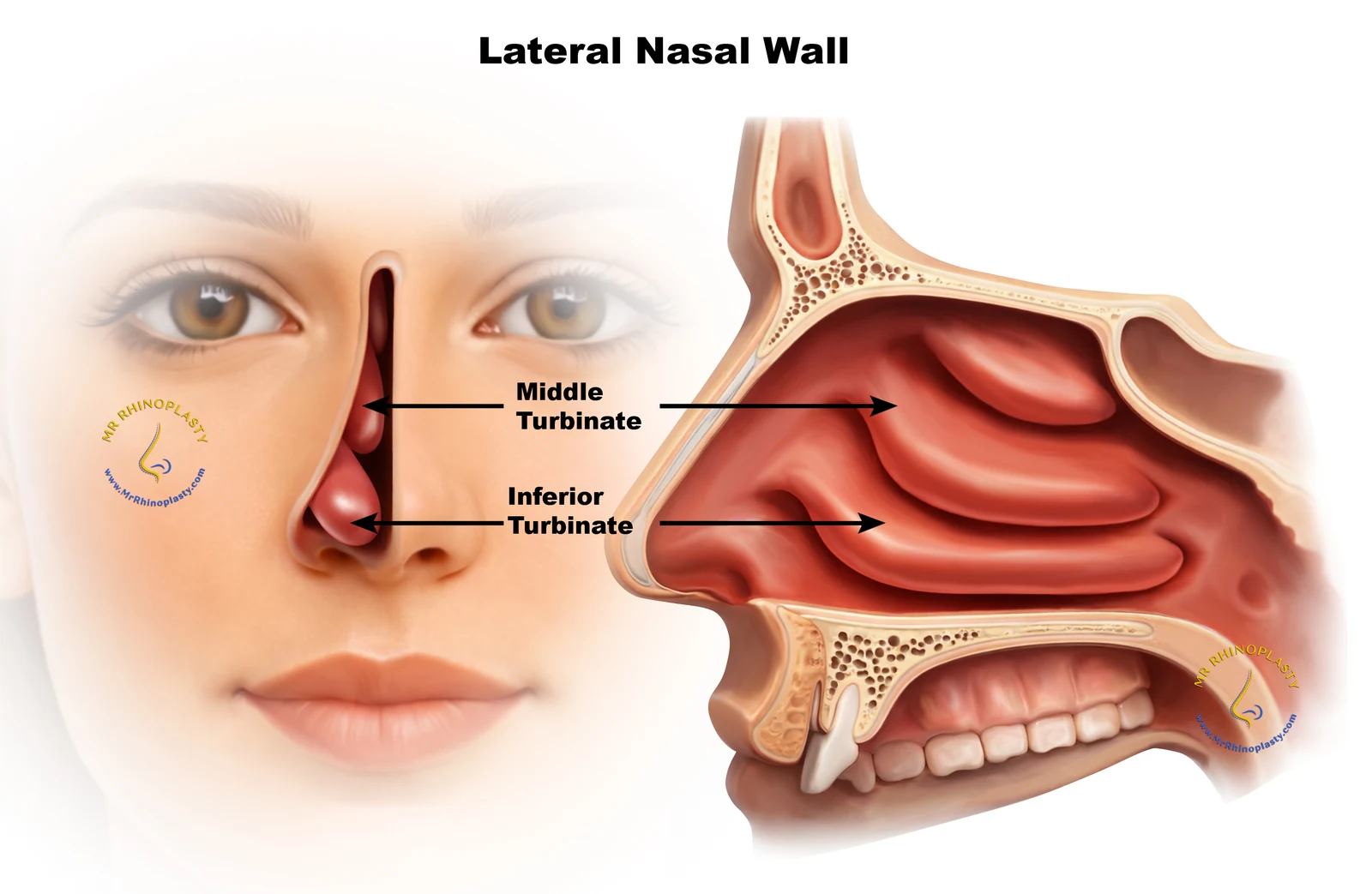
Turbinates
Shelf-like structures that warm, humidify and filter the air.
Internal nasal valve
Between the septum and upper lateral cartilage.
External nasal valve
Formed by the lower lateral cartilages and the rim of the nostril.

The valves are the narrowest points of the airway. Collapse or narrowing at either is a common cause of blockage, particularly during exercise or sleep. Septoplasty treats the septum itself - see What Is Septoplasty?

03

Why Does Nasal Support Matter?

The cartilage and bone framework acts as scaffolding, holding both the external shape and the internal airway open. When it is weakened - through ageing, injury or a previous operation - the effects are often both cosmetic and functional:

  • The tip may drop or become pinched
  • The bridge may narrow
  • The nasal valves may collapse, restricting airflow

Restoring this support, often with the patient's own cartilage, is central to Mr Patel's approach to primary and revision rhinoplasty, reflecting his particular interest in structural grafting.

Illustration of the nose showing its segments: dorsum, side wall, tip and alar
Nasal segments · tap to enlarge
Illustration of the nasal cartilages: upper lateral cartilage and the lateral and medial crus of the lower lateral cartilage
Nasal cartilages · tap to enlarge
Illustration of the lateral nasal wall showing the middle and inferior turbinates
Lateral nasal wall · tap to enlarge
Illustration of the nasal septum: septal cartilage, perpendicular plate of the ethmoid bone, vomer bone and nasal spine
Nasal septum · tap to enlarge

For more detail on nasal anatomy, download the free e-book “Your Rhinoplasty Journey” or watch Mr Patel's dedicated video. To discuss your own anatomy and goals, book a consultation at 51 Harley Street.

Knowledge before decisions

Free Patient Resources

Free E-Book

Your Rhinoplasty Journey

Understand consultations, procedure planning and recovery in a patient-friendly guide written by Mr Patel.

Free PDF guide · Written by Mr Patel

Free Assessment

Am I a Suitable Candidate?

Explore relevant factors including nasal anatomy, overall health, expectations and readiness before your consultation.

Your next step

Begin With a Conversation

Discuss your concerns, ask questions and learn what an individualised assessment could mean for you.