A crooked nose describes a nose that deviates to one side - along the bridge, the tip, or both - so that it no longer sits in a straight line down the centre of the face.
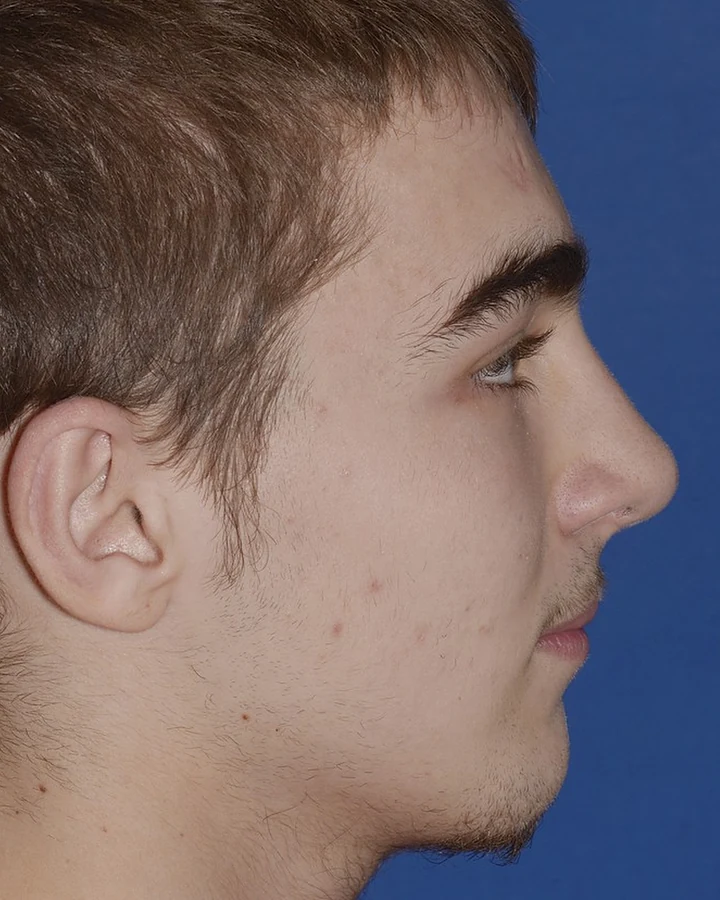
Before
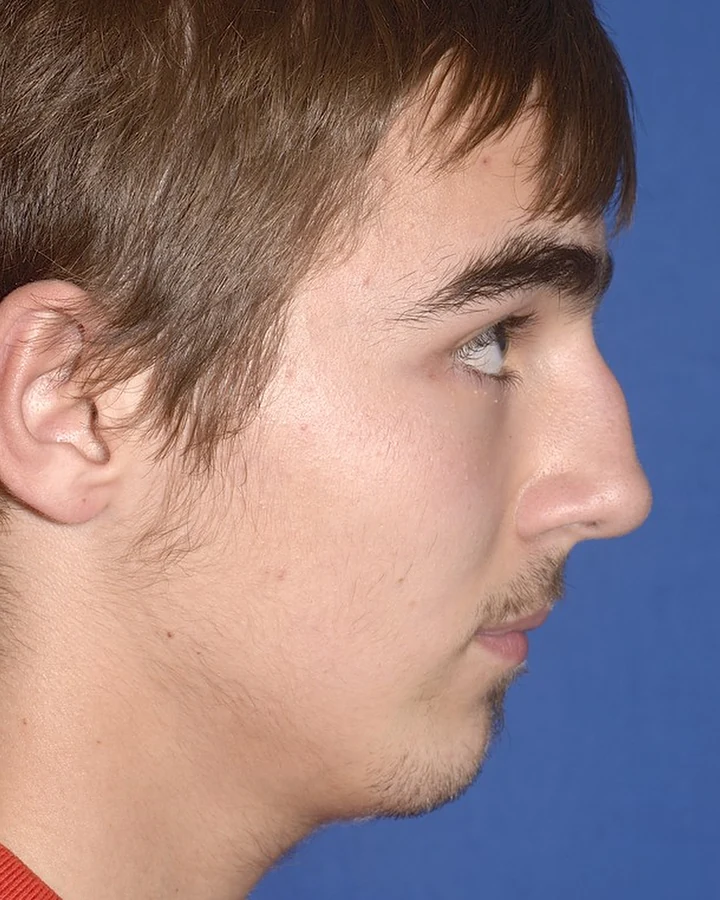
After
The nose has an upper bony framework, a middle cartilage framework and the septum running down the centre. A crooked nose occurs when one or more of these parts sit off the midline, so the bridge, the tip, or both appear to lean to one side or follow a “C” or “S” shaped curve.
Because the septum plays such a central role, a crooked nose is not always purely a cosmetic concern - deviation of the septum can also narrow the airway on one side, affecting breathing as well as appearance.
A crooked nose may be present from birth, become more noticeable as the nose grows during adolescence, or develop following an injury that displaces the underlying bone and cartilage. The nasal septum, which forms the central structural support of the nose, is very often involved in nasal deviation.
A crooked nose is most noticeable from the front, where light and shadow along the bridge can exaggerate the deviation. Because the septum is so often involved, many people with a crooked nose also notice blockage on one side, which is assessed at the same consultation.

Correcting a crooked nose involves realigning the bone and cartilage framework, often combined with septal correction (septoplasty) where the septum itself is deviated. See Crooked Nose Correction and What Is Septoplasty? for more detail.
Crooked nose correction is usually carried out as a septorhinoplasty under general anaesthetic. The septum is straightened and repositioned, the nasal bones are carefully realigned to the midline, and the middle cartilage framework may be supported with spreader grafts to keep the bridge straight. Fully straightening a nose that has been crooked for many years can be challenging, so the aim is a clearly straighter, balanced result with improved breathing.
Most visible bruising and swelling settle over the first few weeks, while the final shape continues to refine over around 12 months as residual swelling subsides - the nasal tip is usually the last area to settle. See Post Operative Care and Healing Journey and Final Results for what to expect at each stage.
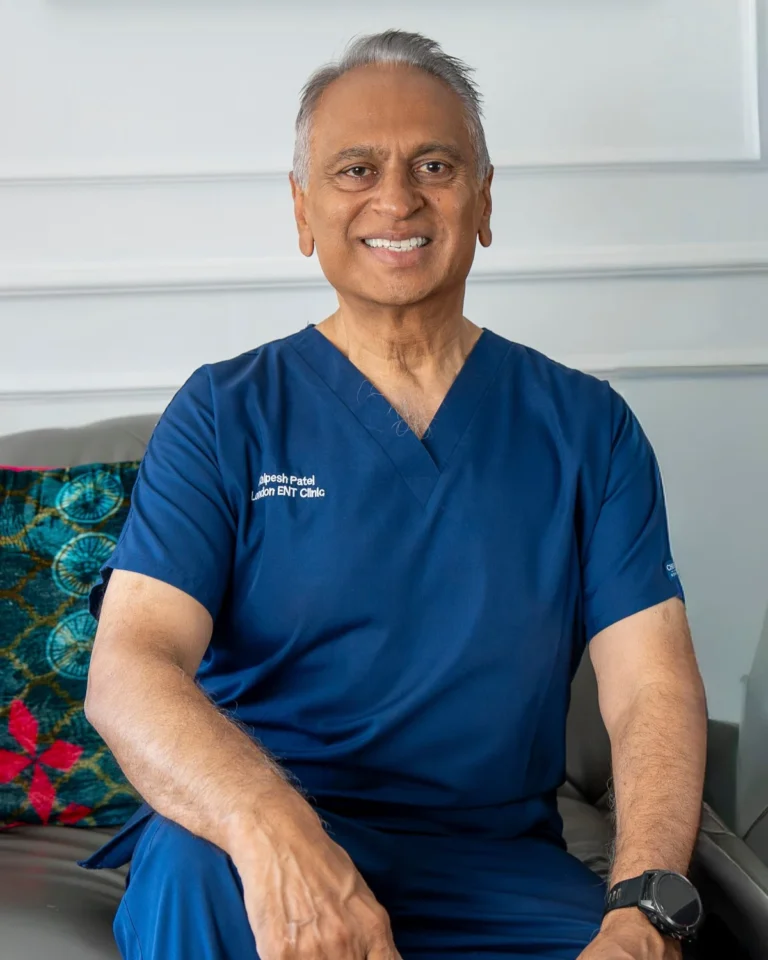
If you are concerned about a crooked nose, book a consultation with Mr Patel to discuss your options.
Personal consultation
Discuss your crooked nose with Mr Patel
A one-to-one assessment of your nose, skin and breathing, with honest advice on what is achievable.
Book a Consultation 0207 262 0297Photographs show individual patients of Mr Patel. Results vary from person to person.
Every nose is different. Mr Patel will assess your anatomy in person and explain the options, recovery and realistic outcome.
Prefer to talk? Call 0207 262 0297