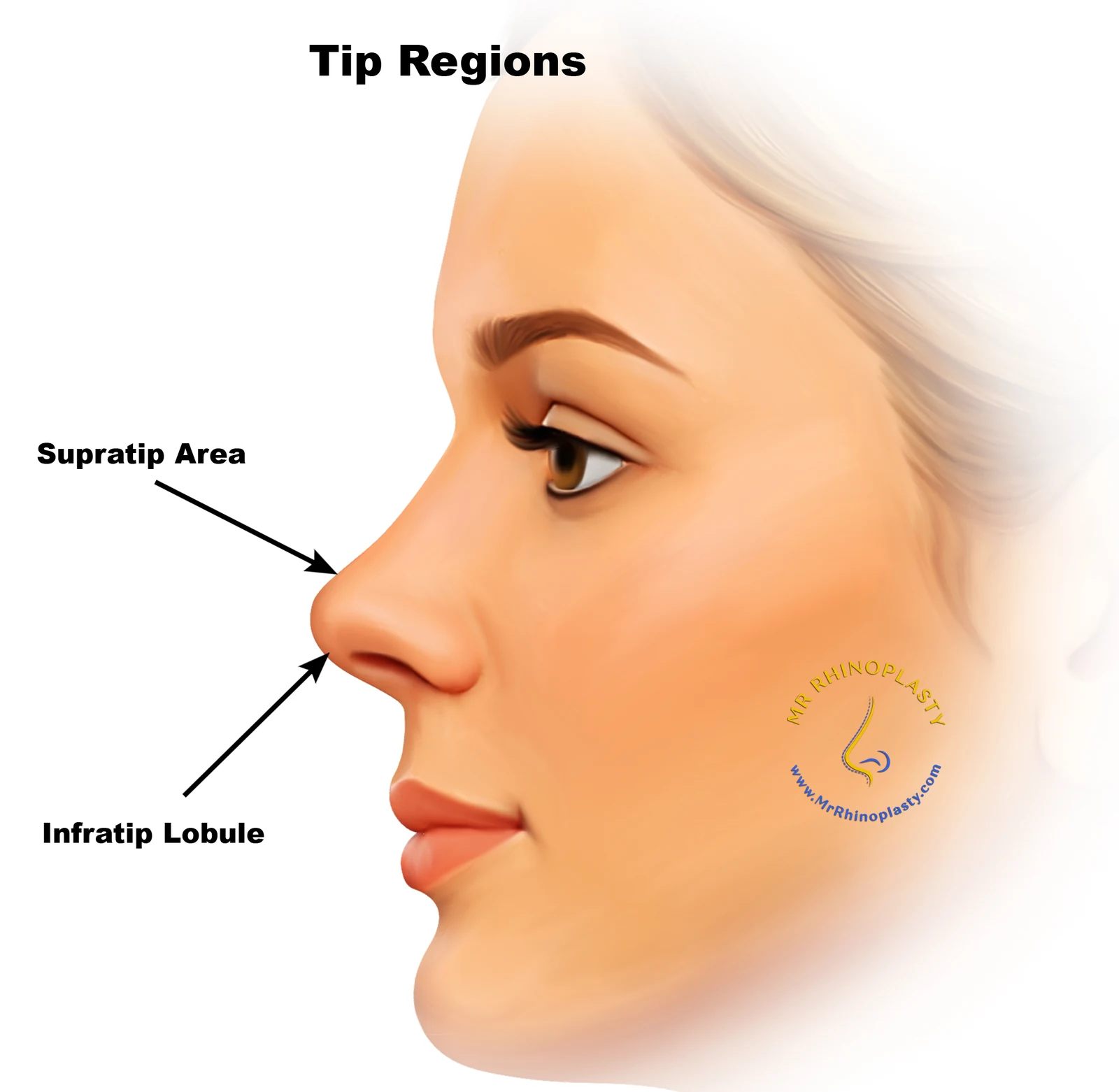
As the supporting tissues of the nose weaken with age, the tip can drop, the bridge can look more prominent and breathing can become more difficult. There is no upper age limit for rhinoplasty in healthy patients, and surgery later in life usually focuses on support and subtle refinement.
How the Nose Changes With Age
These changes happen gradually and vary from person to person:
Drooping tip
Weakening tip support lets the tip drop, which can make the nose look longer.
More prominent bridge
As the tip drops, a hump on the bridge can become more noticeable.
Skin changes
Nasal skin may become thinner or thicker with age.
Weaker airway
Weakened side walls of the nose can narrow the nasal valves and affect breathing.
Is There an Upper Age Limit?
There is no upper age limit for healthy patients. What matters is your general health, your reasons for wanting surgery and realistic expectations. Older patients have a thorough health assessment before surgery, and healing can take a little longer. See Am I a Suitable Candidate?
What Rhinoplasty Can Do Later in Life
Surgery for age-related changes usually focuses on:
Lifting the tip
Supporting and gently lifting a drooping tip.
Strengthening the framework
Cartilage grafts to support weakened cartilage and improve the airway.
Subtle refinement
Changes that keep the nose in harmony with an older face.
Breathing and Ageing
Many older patients notice that their nose feels more blocked than it used to. This can be caused by weakening of the nasal valves or by a deviated septum, both of which can be treated at the same time as any cosmetic changes. See Nasal Valve Collapse.
Read more in Mr Patel’s article Rhinoplasty and Age: Is There a Right Time?
Discuss Your Options
To find out whether rhinoplasty could help with age-related changes to your nose, book a consultation with Mr Patel at 51 Harley Street.