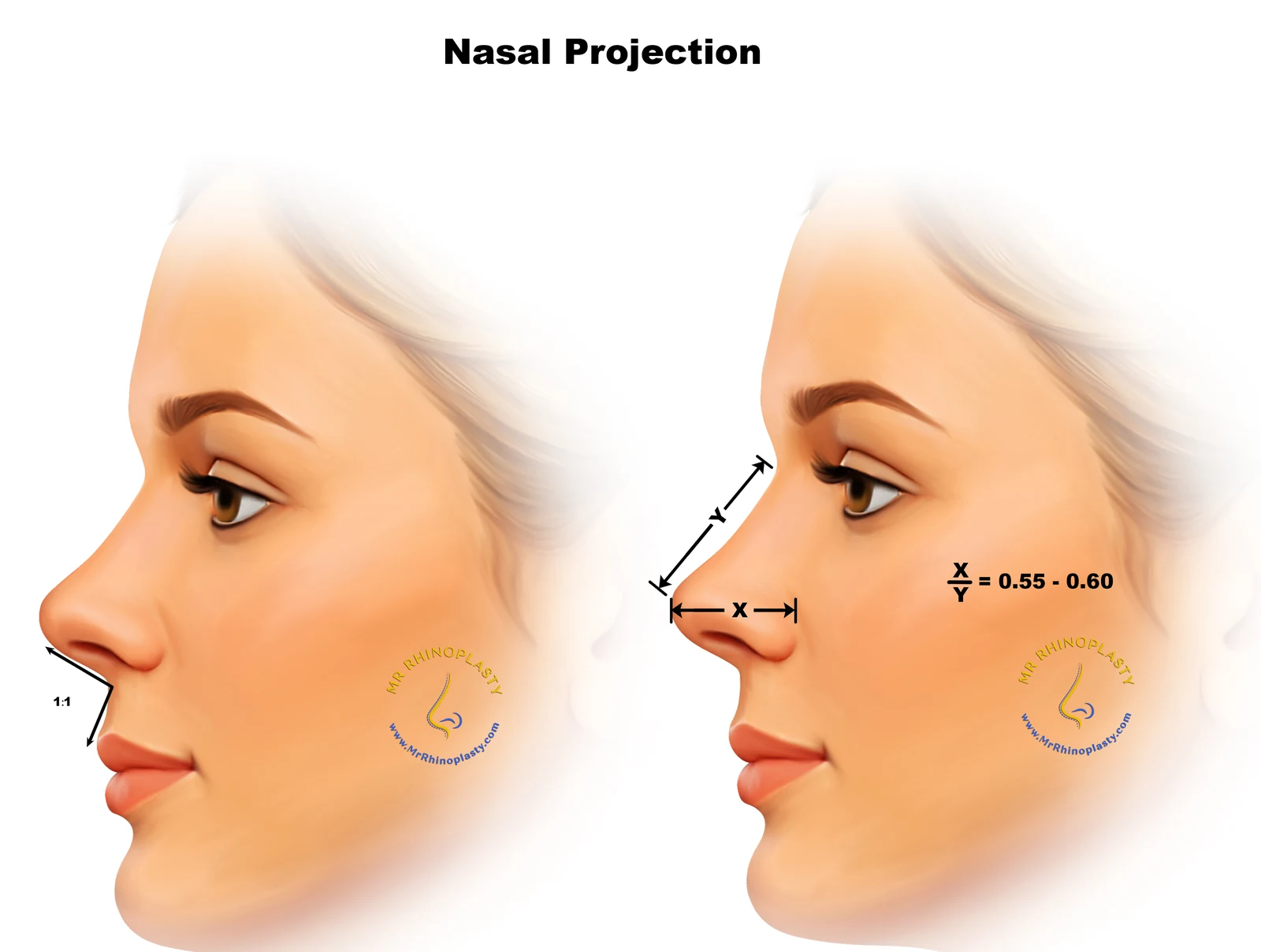
A nose can look too long when the tip droops or sits low, or too short when the tip is turned up and shows too much of the nostrils. Correction works mainly on the tip cartilages and the septum to change length and rotation, keeping the nose in balance with the lips, chin and forehead.
When Does a Nose Look Too Long?
A long nose usually has a tip that points downward or sits low in relation to the upper lip. This may be inherited, or develop with age as the supporting tissues weaken. A long nose can make the upper lip look shorter and the face look older.
Drooping tip
A tip that points downward, often more noticeable when smiling.
Long septum
An over-developed septum can push the tip down and forward.
Ageing changes
Weakening of the tip support over time lets the tip drop.
When Does a Nose Look Too Short?
A short nose often has an upturned tip that shows more of the nostrils from the front. Some people are born with this shape; in others it follows previous surgery, an injury or loss of support from the septum.
Upturned tip
The tip points upward, showing more of the nostrils.
Previous surgery
Too much cartilage removed during earlier rhinoplasty can shorten the nose.
Weak septum
Loss of support from the septum can pull the nose upward and shorten it.
How Is Nasal Length Corrected?
Lengthening or shortening the nose is done by reshaping and repositioning the tip cartilages and, where needed, the septum. Cartilage grafts - usually taken from the septum, and occasionally from the ear or rib - can support the tip in its new position. The aim is a change in proportion that looks natural rather than a dramatic difference.
Assessing Your Proportions
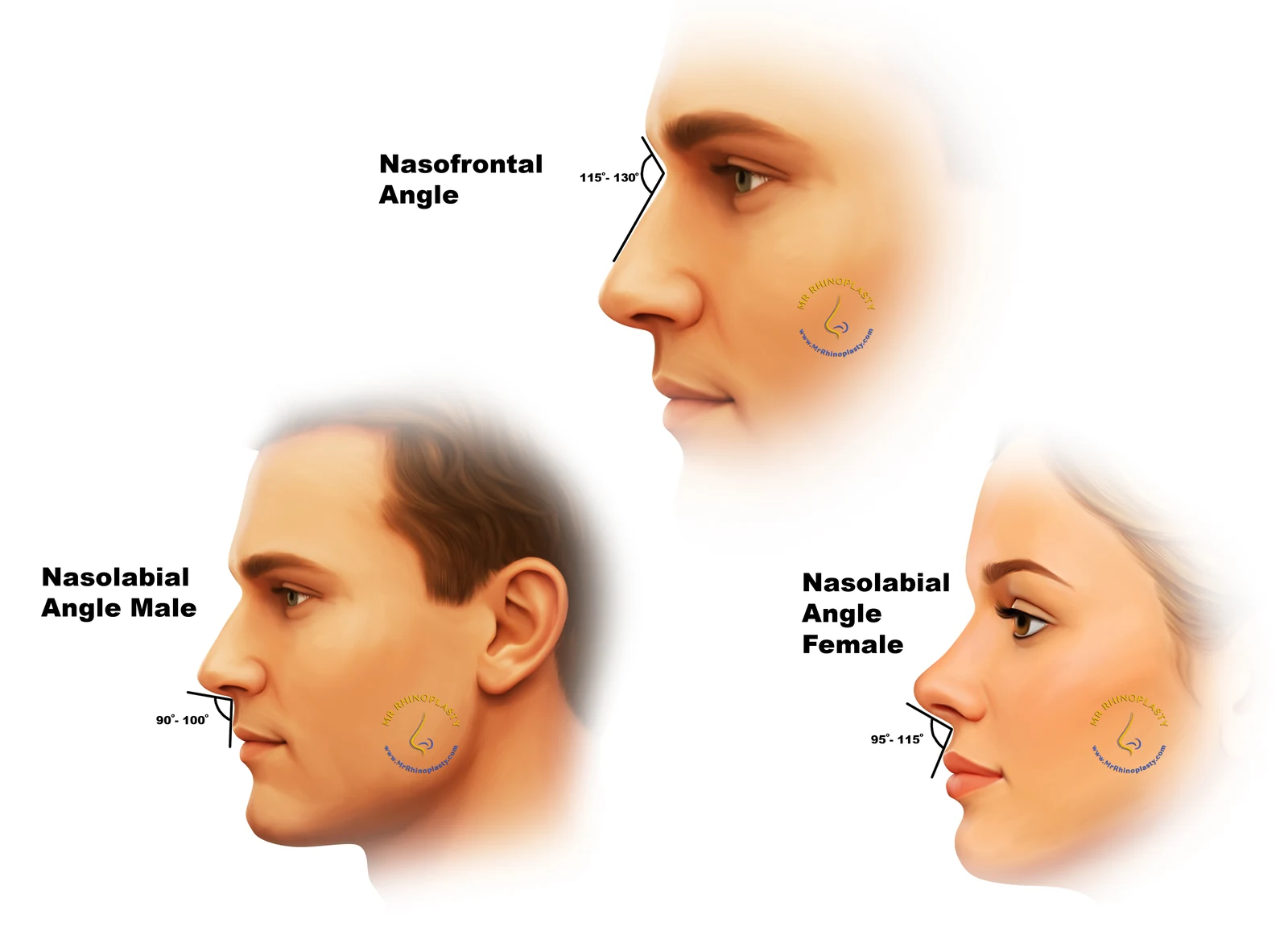
Whether a nose looks long or short depends on the rest of the face. At your consultation Mr Patel looks at the angle between the nose and the upper lip, the projection of the tip and the balance between the nose, lips and chin, and can show you computer imaging of possible changes.
Related concerns: Droopy tip, Over-projected tip and Under-projected tip.
Discuss the Length of Your Nose
To find out how the length and rotation of your nose could be adjusted, book a consultation with Mr Patel at 51 Harley Street.