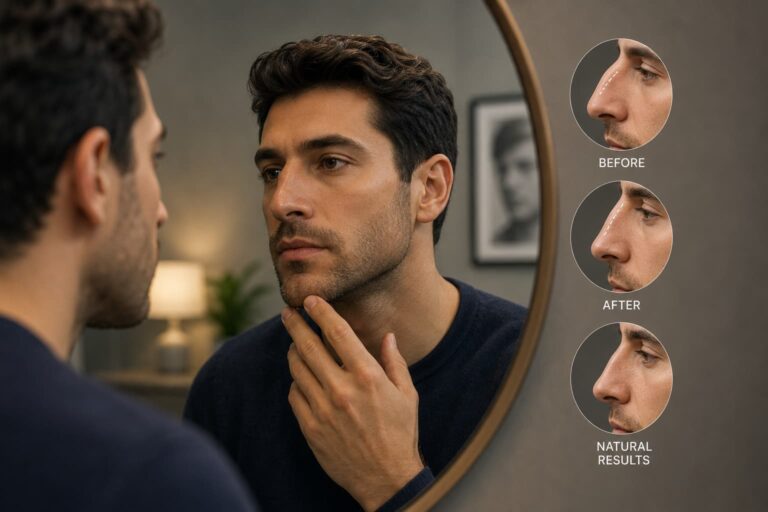

A dorsal hump is a bump on the bridge of the nose, most visible in profile. It is one of the most common reasons people consider rhinoplasty. Many patients have lived with it since their teens, while others notice it after an injury. Understanding what the hump is made of, and why it formed, is the first step in planning a correction that looks natural.
What is a dorsal hump?
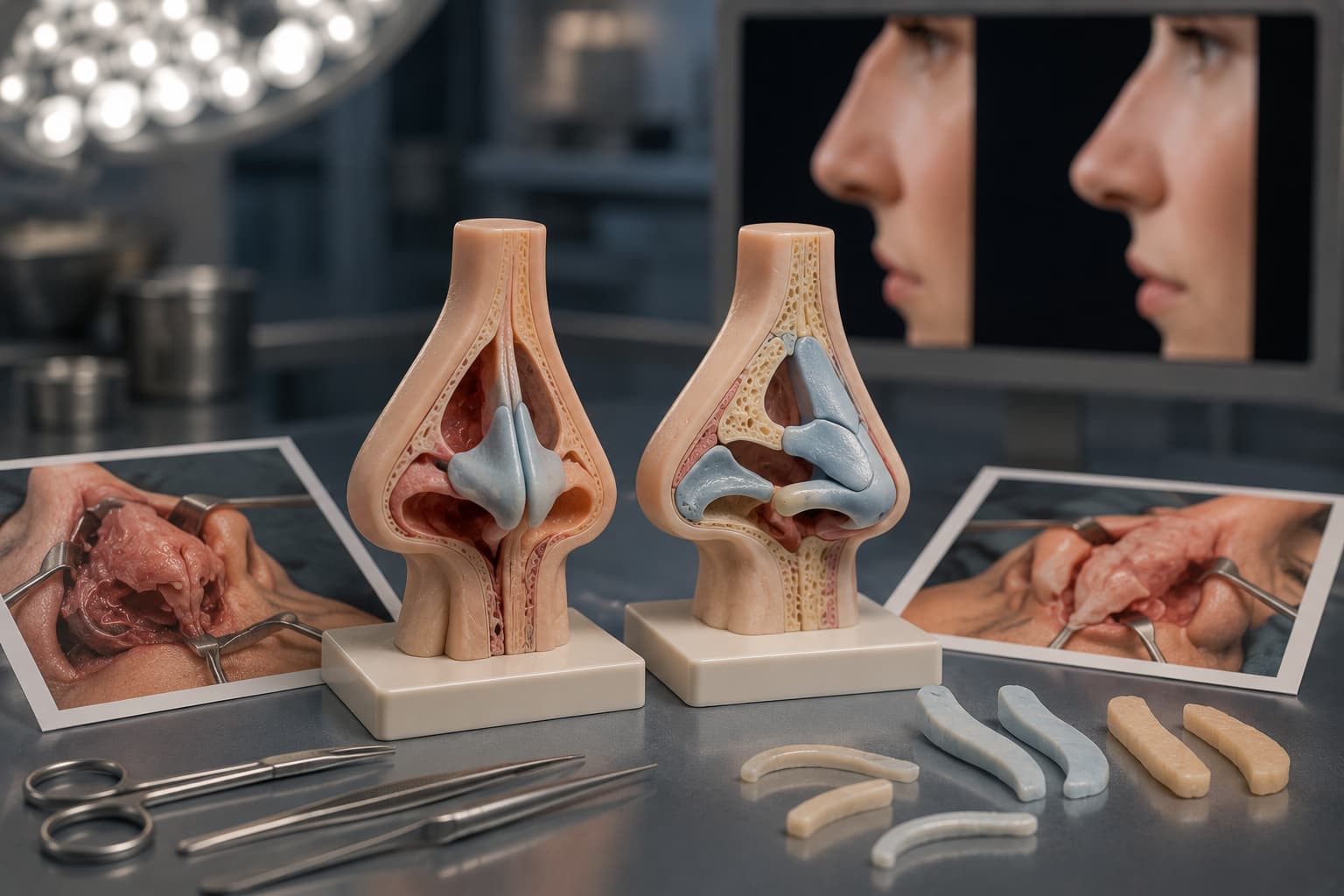
The bridge of the nose (the dorsum) is made of bone in its upper third and cartilage in its lower two-thirds. A hump forms where these two parts meet and project further forward than the rest of the profile. In most people the hump contains both bone and cartilage, and the proportion of each shapes how it is corrected.
What causes a dorsal hump?
- Genetics. Most humps are inherited and become noticeable as the face matures in the teenage years.
- Injury. A knock to the nose can cause irregular bone healing or a buckled septum, producing a bump or a crooked bridge.
- Overall nasal shape. A hump can look more pronounced when the tip sits low or the nose is long, even if the bridge itself is only slightly raised.
Can a dorsal hump be treated without surgery?
Injectable fillers can sometimes disguise a small hump by filling the areas above and below it, so the profile appears straighter. This does not remove the hump and adds volume rather than reducing it, and fillers around the nose carry their own risks. For a lasting change, surgical rhinoplasty is the reliable option.
How is a dorsal hump corrected surgically?
The aim is a smooth, straight or gently sloping bridge that suits your face, not simply the removal of a bump. Depending on your anatomy, Mr Patel may:
- carefully reduce the cartilage and bone of the hump;
- narrow and reposition the nasal bones (osteotomies) so the bridge stays smooth and even after the hump is lowered;
- use preservation techniques, which lower the bridge while keeping its natural structure, where your anatomy suits this approach;
- support the middle of the nose so the airway stays open.
The tip is often refined at the same time so the whole nose stays in proportion. As a consultant ENT surgeon, Mr Patel also checks the septum and nasal valves, so any breathing problem can be treated in the same operation.
Recovery
A splint is usually worn for about a week. Bruising and swelling settle over the following weeks, and the bridge typically looks refined well before the tip has finished settling. You can read more on our post-operative care and healing journey pages.
Next steps
See dorsal hump correction for real patient before-and-after photographs, or book a consultation with Mr Patel to discuss your profile and goals.
Written by Mr Kalpesh Patel FRCS
Consultant ENT & Rhinoplasty Surgeon, London. Over 30 years of ENT surgical experience and more than 3,000 rhinoplasties performed.
This article is general information, not medical advice. Always follow the aftercare plan your surgeon gives you.
Considering surgery?
Talk through your options with Mr Patel
Book a consultationGet the free patient e-bookRelated articles
Male Rhinoplasty: What Men Need to Know

What Happens If My Rhinoplasty Needs Revision?

Rhinoplasty and Age: Is There a Right Time?
Open vs Closed Rhinoplasty: Which Is Better?