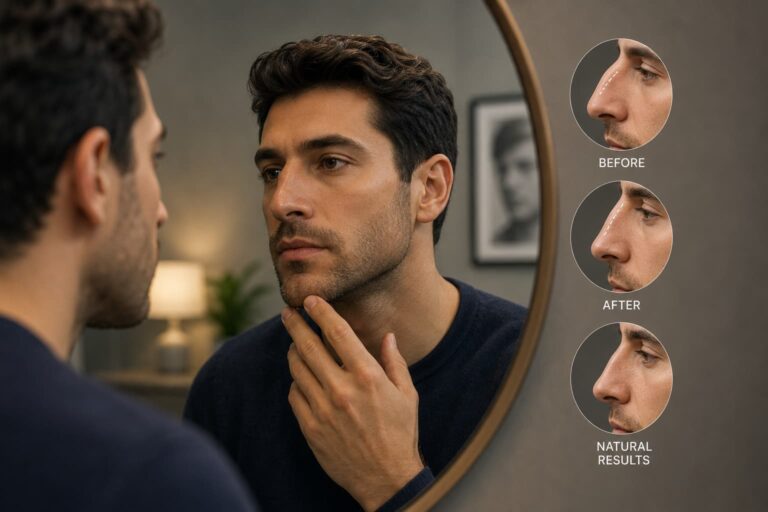

One of the most common worries after rhinoplasty is that the tip of the nose still looks full, wide or “blunt” weeks after surgery. In almost every case, this is normal tip swelling, and it is the slowest part of recovery.
Why does the tip swell for so long?
The tip has thicker skin and more soft tissue than the bridge, and it sits at the end of the nose, where fluid drains away most slowly. When the tip has been reshaped, the tissues need time to shrink down and settle onto the new cartilage framework underneath.
How long does tip swelling last?
Every patient heals differently, but a typical pattern is:
- First 2 weeks: the most visible swelling and bruising, mostly around the eyes and bridge.
- 6 weeks: most people look “photo-ready” to others, but the tip still feels firm and looks slightly full to you.
- 3–6 months: most of the swelling has gone and tip definition becomes clearer.
- 12 months or more: the final shape of the tip is visible. Thicker skin, revision surgery and the open approach can mean the tip takes longer.
Things that make tip swelling seem worse
- Swelling is often greater first thing in the morning and improves through the day.
- Heat, strenuous exercise, salty food and alcohol can make the nose puffier for a while.
- Comparing photographs day to day makes change hard to see. Comparing month to month is more reliable.
What can help
- Keep your head raised when resting in the early weeks.
- Follow your aftercare instructions, including any taping advice.
- Protect the nose from the sun and avoid knocks.
- Be patient: resist judging the tip until it has had time to settle.
Occasionally, persistent swelling in one area is treated in clinic, but this is decided case by case at follow-up.
When to get in touch
Contact the clinic if you notice increasing redness, heat, pain, discharge, a sudden change in shape, or swelling on one side only that is getting worse rather than better.
For a fuller timeline, see Healing Journey and Final Results and Post-Operative Care.
Written by Mr Kalpesh Patel FRCS
Consultant ENT & Rhinoplasty Surgeon, London. Over 30 years of ENT surgical experience and more than 3,000 rhinoplasties performed.
This article is general information, not medical advice. Always follow the aftercare plan your surgeon gives you.
Considering surgery?
Talk through your options with Mr Patel
Book a consultationGet the free patient e-bookRelated articles

Male Rhinoplasty: What Men Need to Know

What Happens If My Rhinoplasty Needs Revision?

Rhinoplasty and Age: Is There a Right Time?
Open vs Closed Rhinoplasty: Which Is Better?