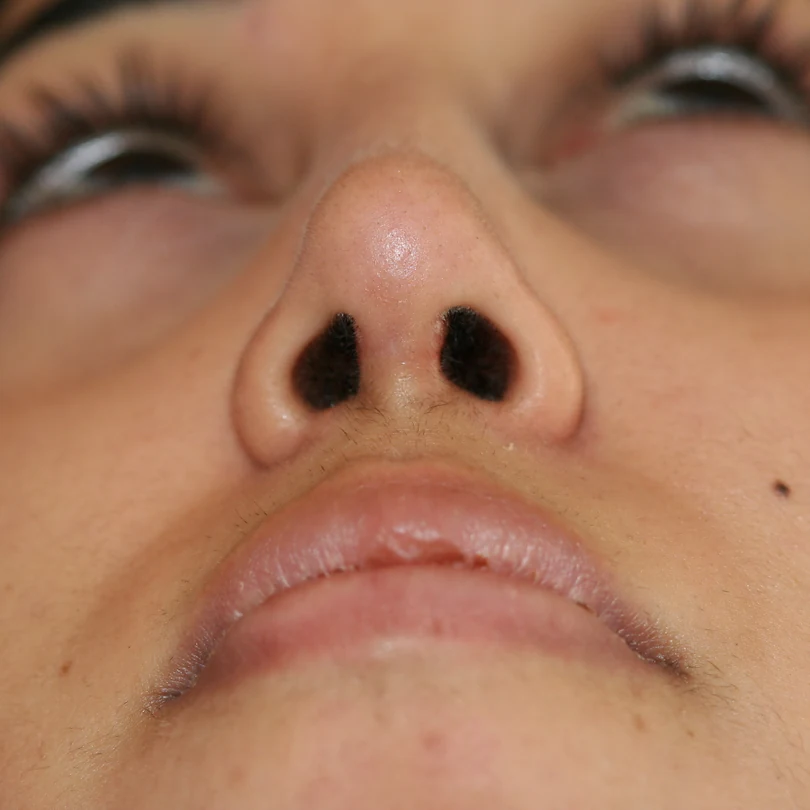
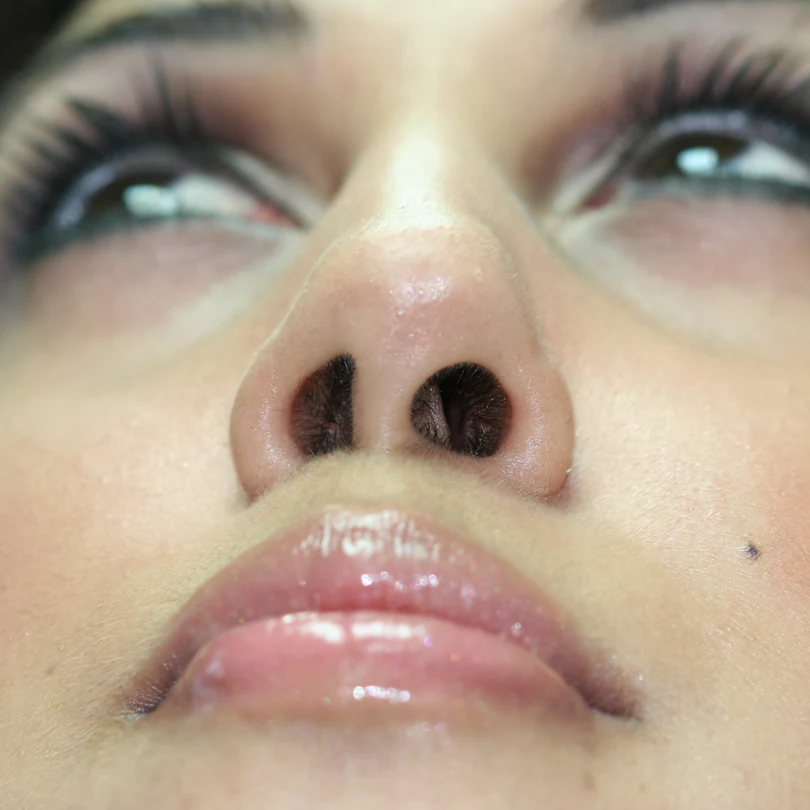
Asymmetrical nostrils describes a visible difference in the size, shape, or position of the two nostrils, most often noticed when the face is viewed from below or directly head-on.
Before
After
The shape of each nostril depends on the alar cartilage on that side, the septum and columella in the middle, and the soft tissue around the nostril rim. When these differ between the left and right sides - or the septum leans to one side - one nostril can look larger, higher or a different shape from the other.
Because complete symmetry is rarely achievable - or even noticeable to others - the aim of treatment is a balanced, harmonious appearance rather than mathematically identical nostrils. This is an important part of setting realistic expectations during consultation.
Some degree of nostril asymmetry is extremely common and entirely normal - very few faces are perfectly symmetrical, and small differences between the left and right side of the nose are present in the majority of people. More noticeable asymmetry can result from a deviated septum, a previous injury, or scar tissue from earlier surgery.
Nostril asymmetry is usually most visible from below and directly from the front. Where it is caused by a deviated septum or the base of the septum dislocating into one nostril, it can be accompanied by a blocked feeling on one side, which is assessed at the same consultation.
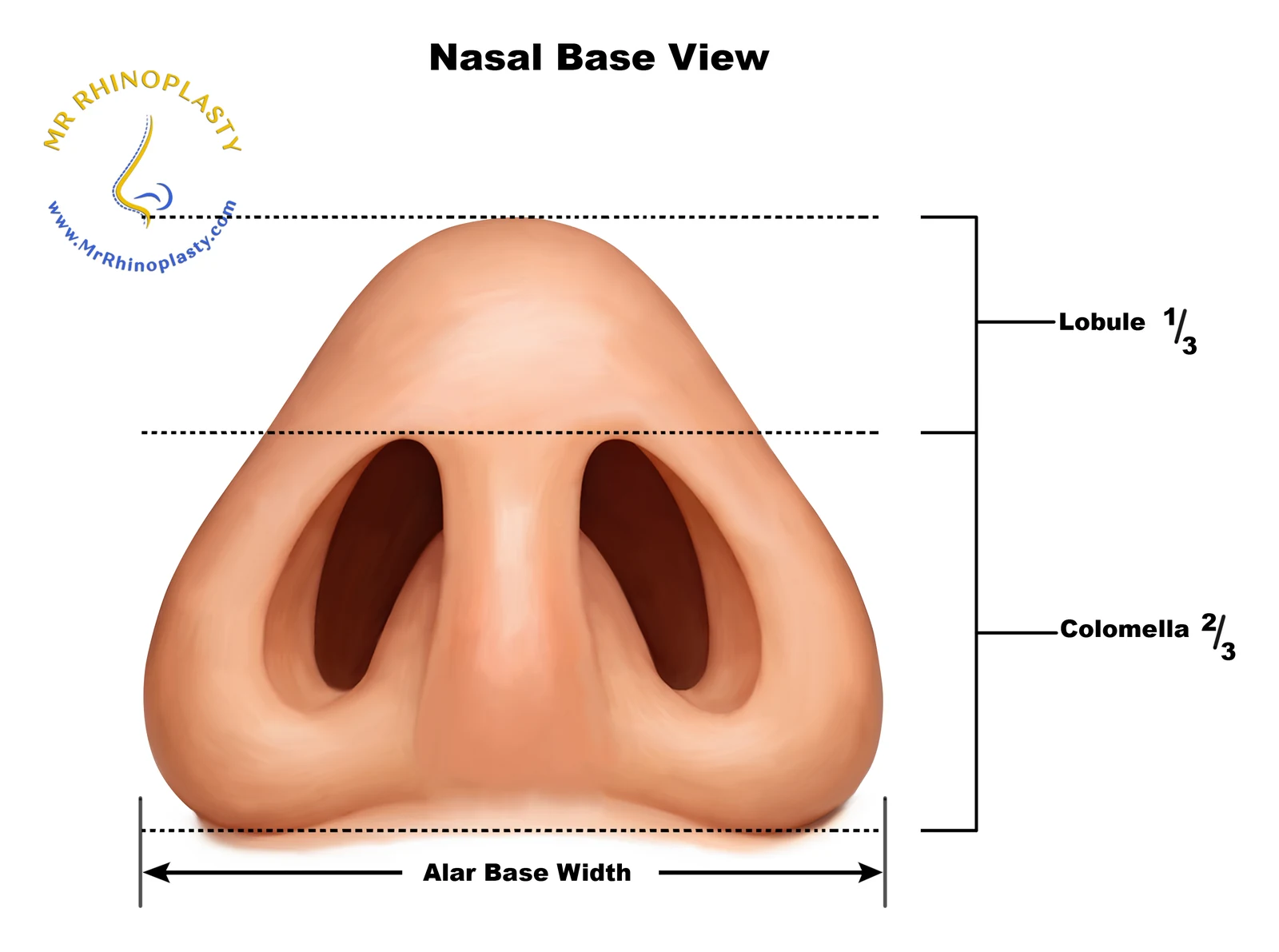
Where nostril asymmetry is a genuine concern, correction depends on its underlying cause - ranging from septal correction to fine adjustments of the alar cartilages and surrounding soft tissue. This is assessed individually for each patient.
Correction depends on the cause and is usually carried out under general anaesthetic, often as part of a rhinoplasty or septorhinoplasty. It may involve repositioning the base of the septum, reshaping or supporting the alar cartilages, adjusting the nostril rims with small cartilage grafts, or refining the nostril bases. The aim is balanced, natural-looking nostrils rather than a perfect mirror image.
Most visible bruising and swelling settle over the first few weeks, while the final shape continues to refine over around 12 months as residual swelling subsides - the nasal tip is usually the last area to settle. See Post Operative Care and Healing Journey and Final Results for what to expect at each stage.
If you are concerned about asymmetry in your nostrils, book a consultation with Mr Patel to discuss your options.
Personal consultation
Discuss your asymmetrical nostrils with Mr Patel
A one-to-one assessment of your nose, skin and breathing, with honest advice on what is achievable.
Book a Consultation 0207 262 0297Photographs show individual patients of Mr Patel. Results vary from person to person.

Every nose is different. Mr Patel will assess your anatomy in person and explain the options, recovery and realistic outcome.
Prefer to talk? Call 0207 262 0297