Consultant Rhinoplasty Specialist · Harley Street, London
Nasal Concerns

Under-Projected Tip

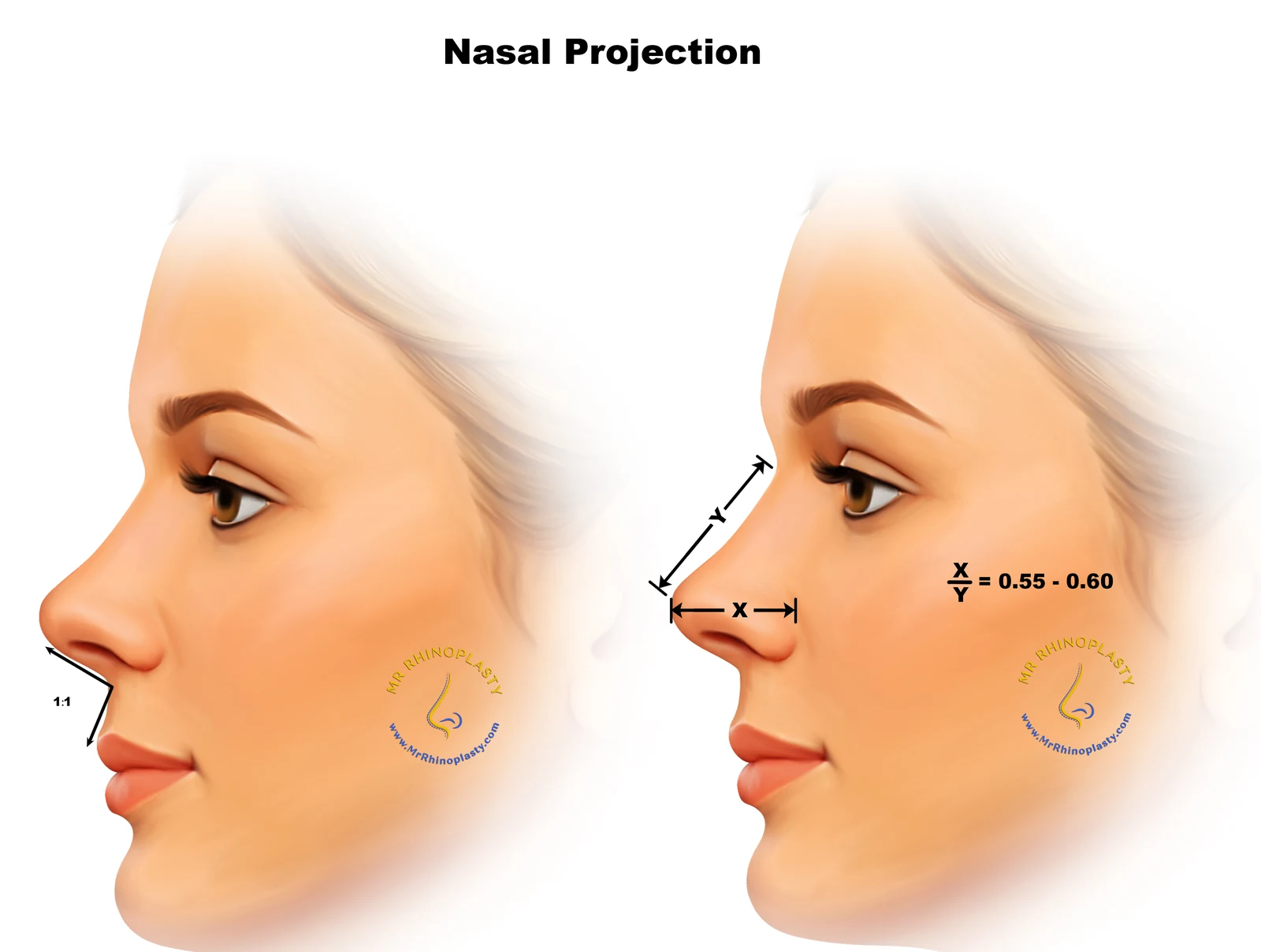
An under-projected tip describes a nasal tip that sits close to the face, with less forward definition than is in proportion with the rest of the facial profile - sometimes appearing flat, or lacking definition, when viewed from the side.

Side profile illustrations showing how nasal tip projection is measured as a ratio
Measuring tip projection · tap to enlarge

What Is an Under-Projected Tip?

Tip projection describes how far the tip stands out from the face. When the tip cartilages are short, small or weak, or have lost support, the tip sits closer to the face and the nose can look flat or lacking definition from the side.

An under-projected tip is different from a droopy tip: under-projection relates to how far the tip extends from the face, while droopiness relates to the angle of the tip. The two are assessed separately, although they can occur together.

Causes and Characteristics

Under-projection may be a natural feature of nasal anatomy, particularly where the lower lateral cartilages are smaller or weaker than average. It can also result from a previous rhinoplasty in which too much tip support or cartilage was removed.

An under-projected tip is most noticeable in profile, and can make the bridge look relatively prominent or the nose appear short and rounded. Where it follows previous surgery, it may come with other signs of weakened support, which is assessed at the same consultation.

Treatment options

Increasing tip projection generally involves adding structural support using cartilage grafts - often taken from the septum or rib - to bring the tip forward and create better definition.

Under-Projected Tip Correction

Increasing tip projection is usually carried out as part of a rhinoplasty under general anaesthetic, most often through an open approach. Cartilage grafts - such as a columellar strut or septal extension graft, taken from the septum, ear or rib - are used to support and lengthen the tip, and tip grafts can add definition. The tip is brought forward in proportion with the bridge and the rest of the face.

Most visible bruising and swelling settle over the first few weeks, while the final shape continues to refine over around 12 months as residual swelling subsides - the nasal tip is usually the last area to settle. See Post Operative Care and Healing Journey and Final Results for what to expect at each stage.

If you are concerned about the projection of your nasal tip, book a consultation with Mr Patel to discuss your options.

Mr Kalpesh S Patel FRCS

Personal consultation

Discuss your under-projected tip with Mr Patel

A one-to-one assessment of your nose, skin and breathing, with honest advice on what is achievable.

Book a Consultation 0207 262 0297
  • FRCS (ORL-HNS) Consultant Surgeon
  • Founding President, BSRS
  • 51 Harley Street, London
Harley Street, London

Surgical precision, natural results

Every nose is different. Mr Patel will assess your anatomy in person and explain the options, recovery and realistic outcome.

Prefer to talk? Call 0207 262 0297