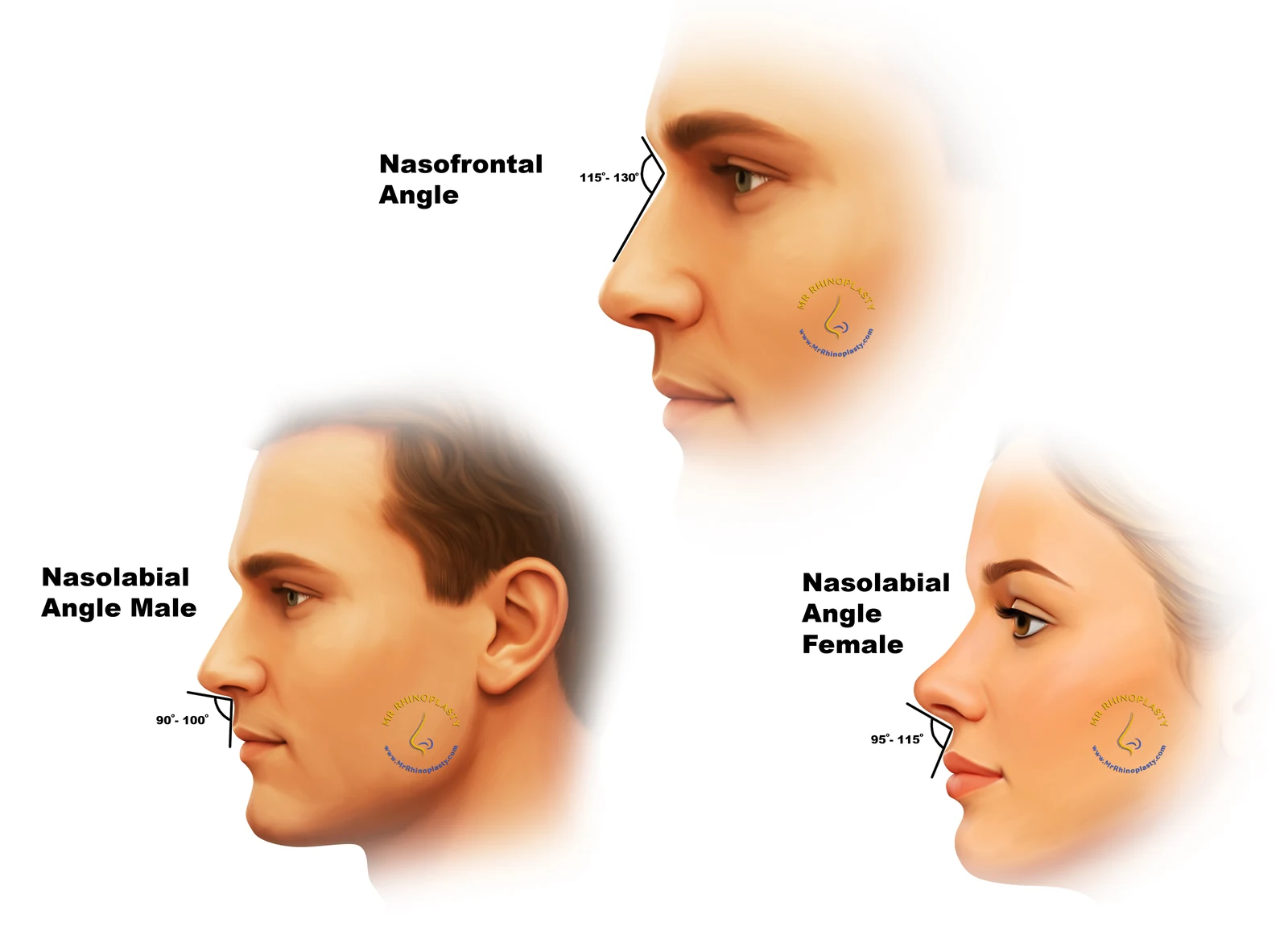
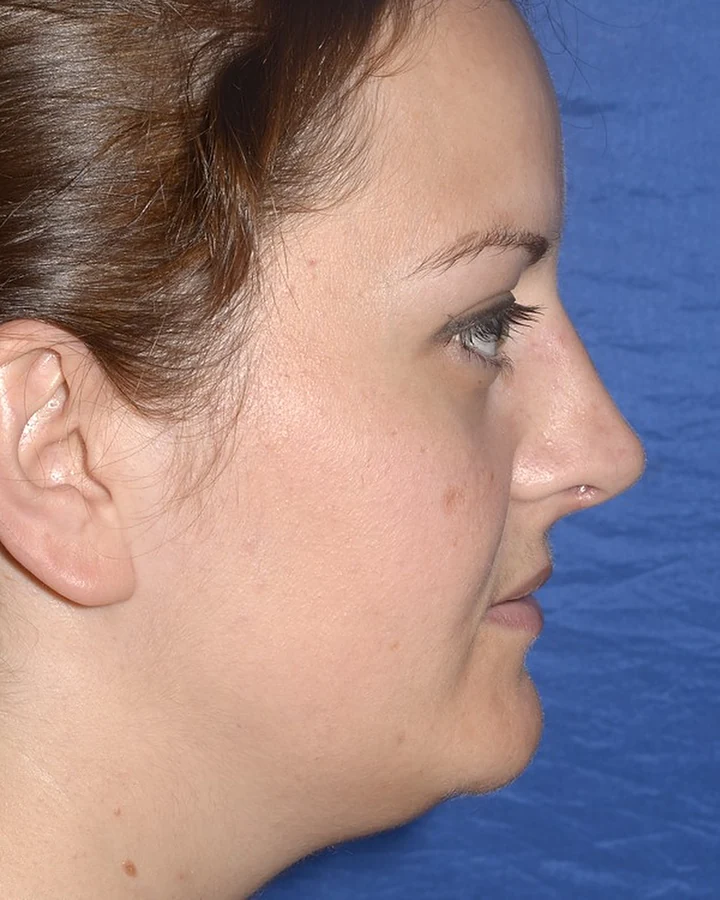
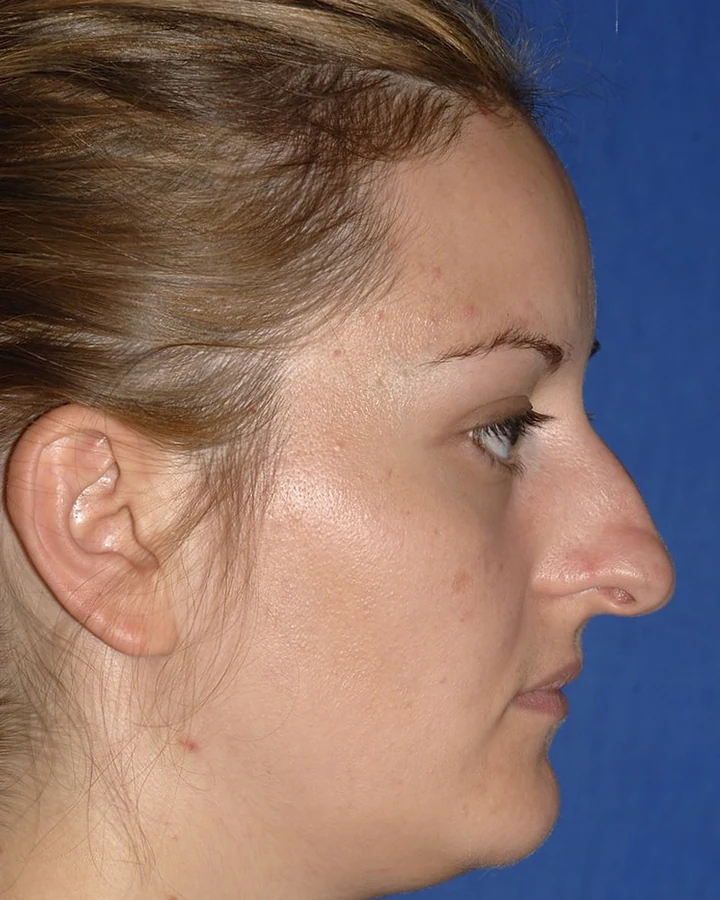
A droopy tip describes a nasal tip that points downward, often becoming more noticeable when smiling, due to the angle between the tip of the nose and the upper lip - known as the nasolabial angle - being lower than average.
Before
After
The position of the nasal tip depends on the strength of the tip cartilages, the ligaments that link them to the rest of the nose, and the support provided by the septum. When this support is weaker, the tip can sit lower, reducing the angle between the nose and the upper lip.
A droopy tip is different from an over-projected tip: droopiness relates to the angle of the tip, while projection relates to how far the tip extends from the face. A nose can have one of these features, both, or neither.
A droopy tip can be present from an early age as a feature of natural anatomy, but often becomes more pronounced with age, as the cartilage and supporting ligaments of the nose gradually weaken and lose some of their tension. A droopy tip can often be exacerbated when the patient smiles, due to a combination of factors, which include activity within the depressor septi muscle, which runs along the columella and can pull the tip down during smiling.
A droopy tip is most noticeable in profile and can make the nose look longer than it is. It is mainly a cosmetic concern, but because the tip and nostrils share the same support, a weak, low tip can sometimes be associated with a feeling of reduced airflow, which is assessed at the same consultation.
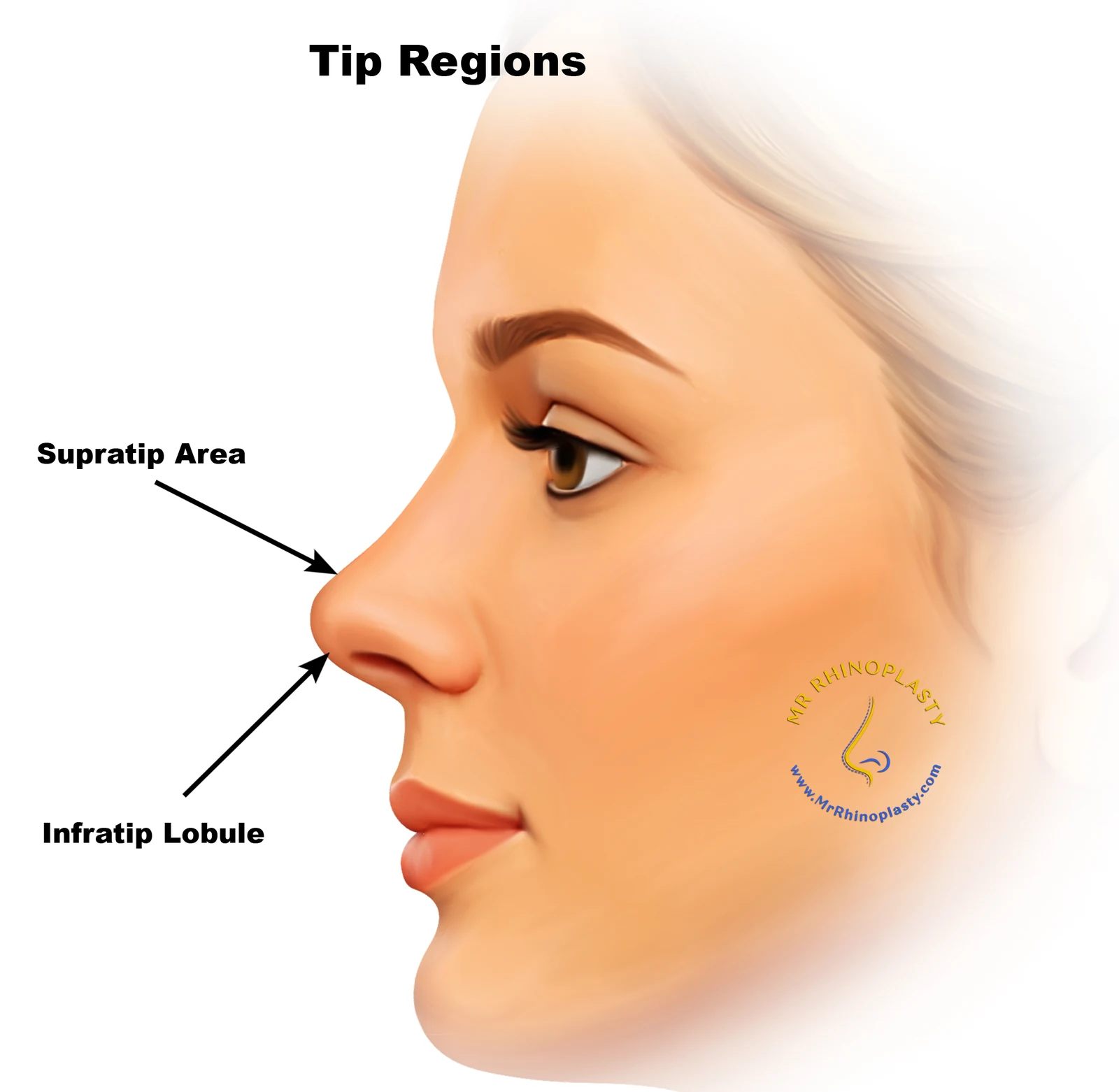
A droopy tip is corrected through tip rotation and support techniques, which lift the tip and improve its angle, often using a cartilage graft to maintain the new position over the long term.
Droopy tip correction is usually carried out as part of a rhinoplasty under general anaesthetic. The tip cartilages are repositioned and secured with sutures to rotate the tip upwards and improve the nose-to-lip angle, and a small cartilage graft - often from the septum - is commonly used to strengthen the tip so it keeps its new position. Where the depressor septi muscle pulls the tip down on smiling, this can be released at the same time.
Most visible bruising and swelling settle over the first few weeks, while the final shape continues to refine over around 12 months as residual swelling subsides - the nasal tip is usually the last area to settle. See Post Operative Care and Healing Journey and Final Results for what to expect at each stage.
If you are concerned about a droopy tip, book a consultation with Mr Patel to discuss your options.
Personal consultation
Discuss your droopy tip with Mr Patel
A one-to-one assessment of your nose, skin and breathing, with honest advice on what is achievable.
Book a Consultation 0207 262 0297Photographs show individual patients of Mr Patel. Results vary from person to person.

Every nose is different. Mr Patel will assess your anatomy in person and explain the options, recovery and realistic outcome.
Prefer to talk? Call 0207 262 0297