

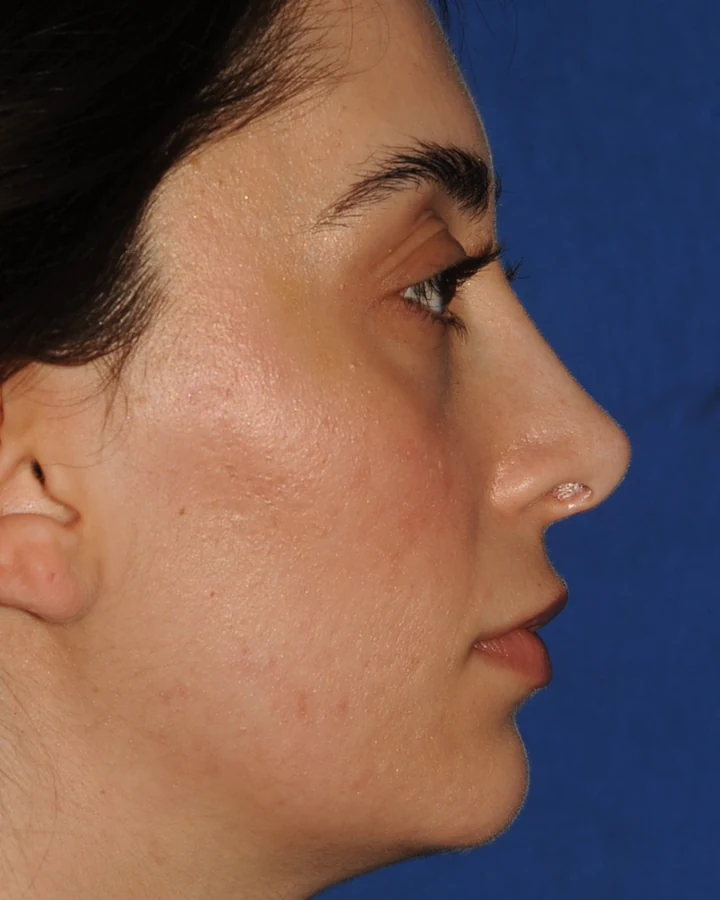
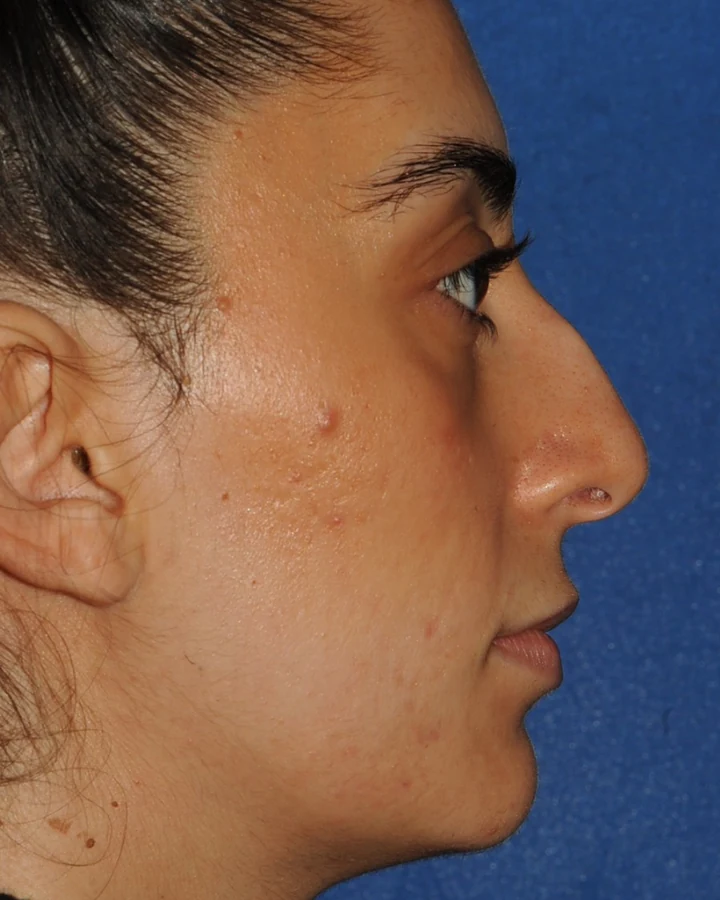
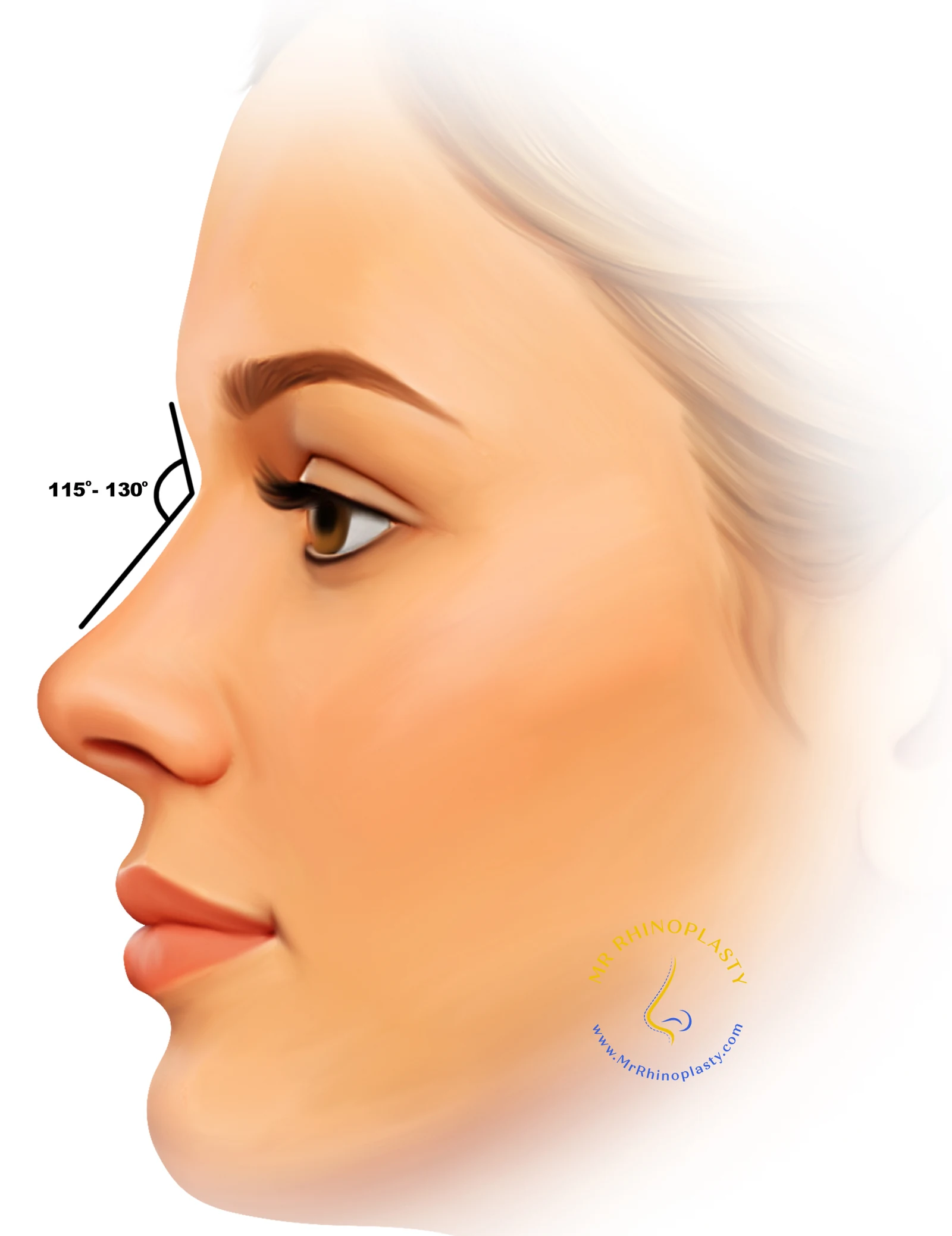
The bridge of the nose - the dorsum - is supported by bone in its upper third and by cartilage below. A dorsal hump forms where this framework sits higher than the line running from the forehead to the tip, so the profile curves outwards rather than following a smooth or gently sloping line. Whether the hump is mainly bony, mainly cartilaginous or a combination of both is an important part of planning how it is corrected.
A dorsal hump is sometimes confused with a wide bridge, but the two are different: a hump refers to height or convexity seen in profile, while width is assessed when the face is viewed head-on. The two often occur together and can be addressed within the same procedure.
Dorsal humps are most often hereditary, becoming apparent once the nose finishes growing during adolescence. They can also develop, or become more noticeable, following a nasal injury - if the bone or cartilage heals with extra height along the bridge, a hump can appear where none was present before.
Because it is seen most clearly from the side, a dorsal hump can make the nose look larger or longer than it is, and can make the tip appear to point downwards. It is mainly a cosmetic concern, but it can occur alongside internal problems such as a deviated septum, so breathing is assessed at the same consultation.

Personal consultation
Discuss your dorsal hump with Mr Patel
A one-to-one assessment of your nose, skin and breathing, with honest advice on what is achievable.
Book a Consultation 0207 262 0297